
Details
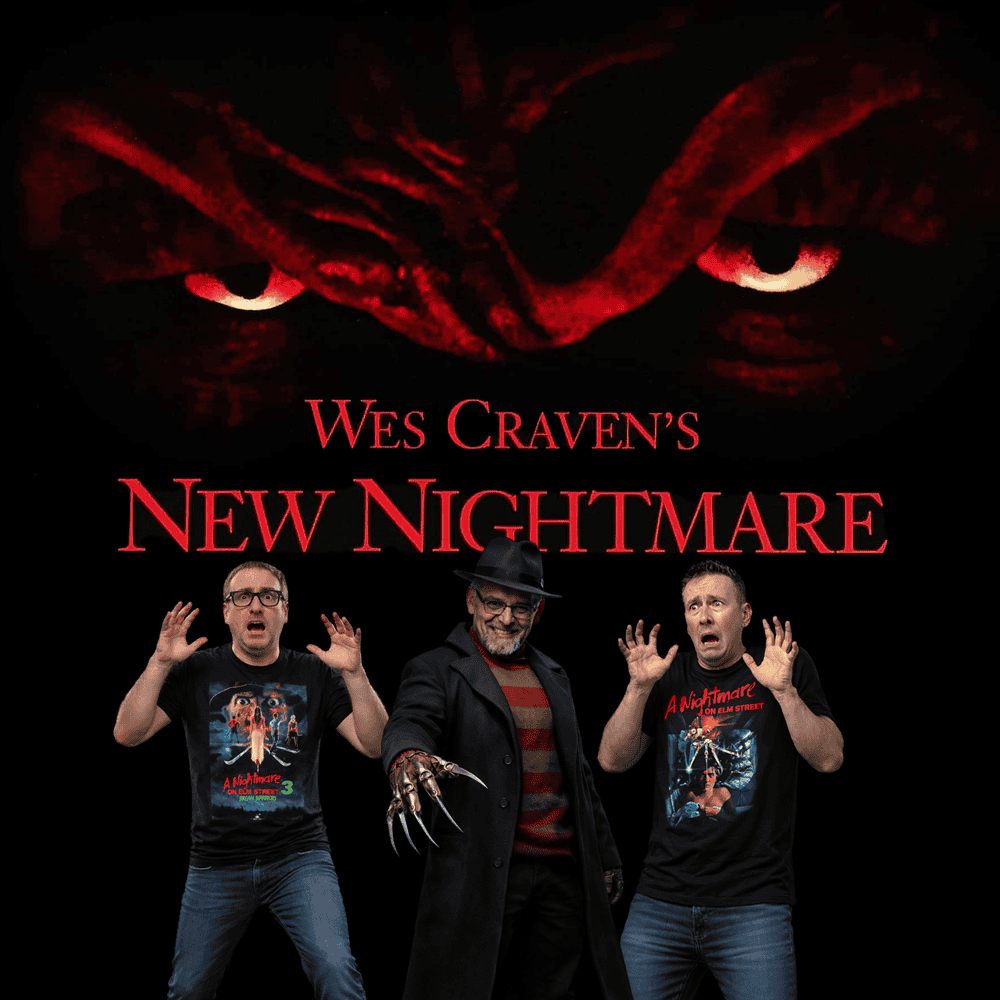
Movie TitleWes Craven’s New Nightmare
Release DateOctober 14, 1994
TaglineThis time, staying awake won’t save you.
Runtime112 minutes
DirectorWes Craven
Screenplay Written ByWes Craven
Based OnCharacters and concepts from A Nightmare on Elm Street, created by Wes Craven
Is It a Remake?No. It is the seventh Nightmare on Elm Street film, but it functions as a meta, self-contained sequel outside the standard series continuity.
BudgetApproximately $8 million
Box OfficeApprox. $18.1 million domestic / Approx. $19.8 million worldwide
Main Cast
Heather LangenkampHeather Langenkamp / Nancy Thompson
Robert EnglundRobert Englund / Freddy Krueger
Miko HughesDylan Porter
David NewsomChase Porter
John SaxonJohn Saxon / Donald Thompson
Tracy MiddendorfJulie
Fran BennettDr. Christine Heffner
Wes CravenWes Craven
Robert ShayeRobert Shaye
Awards
⭐ Fantasporto Winner — International Fantasy Film Award, Best Screenplay, Wes Craven
⭐ Fantasporto Nominee — International Fantasy Film Award, Best Film, Wes Craven
⭐ Film Independent Spirit Awards Nominee — Best Feature
⭐ Saturn Awards Nominee — Best Horror Film
⭐ Saturn Awards Nominee — Best Performance by a Younger Actor, Miko Hughes
⭐ Saturn Awards Nominee — Best Music, J. Peter Robinson
⭐ Fangoria Chainsaw Awards Winner — Best Screenplay, Wes Craven
⭐ Fangoria Chainsaw Awards Winner — Best Actress, Heather Langenkamp
Short Plot Summary
Years after playing Nancy Thompson, Heather Langenkamp begins experiencing disturbing calls, earthquakes, and nightmares connected to Freddy Krueger. When Wes Craven reveals that an ancient evil has taken Freddy’s form and is trying to break into reality, Heather must confront the monster by stepping back into the role that made her a horror icon.
↑ Return to Top
Key Quotes
“Miss me?” — Freddy Krueger
“Every kid knows who Freddy is.” — Heather Langenkamp
“I think the only way to stop him is to make another movie.” — Wes Craven
“Is it a story?” — Dylan Porter
Trivia
Director
- Wes Craven returned to write and direct this installment after creating the original A Nightmare on Elm Street.
- The film’s meta-horror concept has Craven appearing as himself and writing a new Freddy story inside the movie.
- Craven had explored the idea of Freddy breaking into the real world years earlier, but the concept was not used for Dream Warriors.
- The film’s self-aware horror approach is often viewed as a creative bridge to Craven’s later work on Scream.
Cast / Casting
- Heather Langenkamp plays a fictionalized version of herself while also returning to the identity of Nancy Thompson.
- Robert Englund plays both himself and Freddy Krueger, with Freddy presented as a darker supernatural entity rather than the quippier sequel version.
- John Saxon returns and plays both himself and a version of Donald Thompson, Nancy’s father from the original film.
- Johnny Depp was considered for a cameo, but Wes Craven later said he never worked up the courage to ask him.
Soundtrack / Score
- The score was composed by J. Peter Robinson.
- WaterTower Music’s soundtrack listing credits Robinson across tracks including “Playground,” “A New Nightmare Begins,” and “The Glove Goes Berserk.”
- The film’s music supports a more mythic and ominous version of Freddy rather than the pop-horror tone of some later sequels.
- J. Peter Robinson received a Saturn Award nomination for Best Music for the film.
Location
- The film is set largely around Los Angeles and the movie-industry world surrounding Heather Langenkamp, Wes Craven, Robert Englund, and New Line Cinema.
- IMDb lists filming locations including Gothic Avenue in Granada Hills, 5132 Calvin Avenue in Tarzana, and Los Angeles, California.
- The story uses Southern California’s real-world setting to blur the line between horror movie fiction and everyday reality.
- The earthquake elements in the film gained extra resonance because production occurred around the time of the 1994 Northridge earthquake.
Behind-The-Scenes
- The film was released for the 10th anniversary of the original A Nightmare on Elm Street.
- Freddy’s look was redesigned to be more organic and threatening, including a darker coat, a green hat, and a more bone-like glove.
- The film was developed under the working title A Nightmare on Elm Street 7: The Ascension.
- Real damage footage connected to the 1994 Northridge earthquake was incorporated into the movie.
Nostalgia
- The movie brings back several key figures from the original Nightmare on Elm Street, including Heather Langenkamp, Robert Englund, John Saxon, Wes Craven, and New Line’s Robert Shaye.
- Unlike many sequels, New Nightmare treats Freddy as scary again, dialing back the jokey version that had taken over the franchise.
- The film turns the audience’s real-world knowledge of Freddy into part of the plot, making fandom itself part of the horror.
- Its reality-vs-fiction hook makes it one of the most talked-about entries in the franchise for horror fans who love meta storytelling.
Easter Eggs
- The film contains callbacks to the original A Nightmare on Elm Street, including familiar character identities, imagery, and the idea of Nancy confronting Freddy again.
- Heather’s transition back into Nancy blurs actor, character, and audience memory into one horror-movie nightmare.
- Robert Englund’s dual role as actor and monster lets the film play with Freddy’s status as both fictional character and pop-culture icon.
- The title frames the movie as both a new Freddy story and a nightmare belonging to Wes Craven himself.
Misc.
- Wes Craven’s New Nightmare was released domestically on October 14, 1994.
- The film is rated R and runs 112 minutes.
- The Numbers lists the production budget at approximately $8 million.
- Your 3 Guys and a Flick ratings page lists the movie as Episode 260 with 4.50 ratings, so the Episode Snapshot has been updated to 4.5.
Sources Cited
3 Guys and a Flick — Podcast 260: Wes Craven’s New Nightmare
3 Guys and a Flick — Ratings
IMDb — Wes Craven’s New Nightmare
IMDb — Wes Craven’s New Nightmare Full Cast & Crew
IMDb — Wes Craven’s New Nightmare Awards
IMDb — Wes Craven’s New Nightmare Quotes
IMDb — Wes Craven’s New Nightmare Taglines
IMDb — Wes Craven’s New Nightmare Filming Locations
AFI Catalog — Wes Craven’s New Nightmare
Box Office Mojo — Wes Craven’s New Nightmare
The Numbers — Wes Craven’s New Nightmare
Rotten Tomatoes — Wes Craven’s New Nightmare
WaterTower Music — Wes Craven’s New Nightmare Soundtrack
Wikipedia — Wes Craven’s New Nightmare
↑ Return to Top