Details
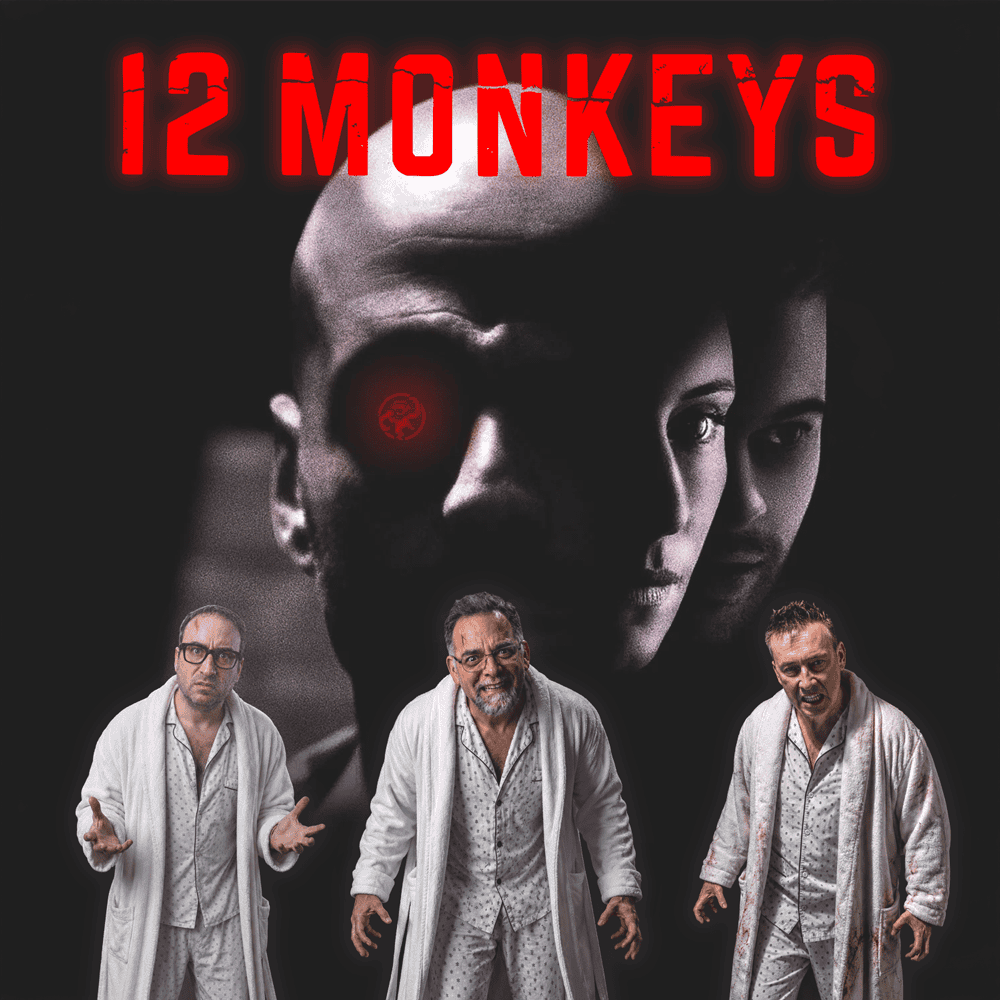
Movie Title12 Monkeys
Release DateLimited: December 27, 1995 (USA); Wide: January 5, 1996 (USA)
TaglineThe future is history.
Runtime129 min / 2h 9m
DirectorTerry Gilliam
ScreenplayDavid Webb Peoples & Janet Peoples
Based OnLa Jetée (1962 short film) by Chris Marker
CinematographerRoger Pratt
Country of OriginUnited States
Sequel / FranchiseStandalone film; inspired the Syfy television series 12 Monkeys (2015–2018)
Budget$29.5 million
Box Office$57.1 million domestic / $168.8 million worldwide — a strong box-office performer that nearly tripled its budget globally
Rotten Tomatoes98% Critics / 94% Audience
Metacritic74 / 100 · 8.3 User
IMDb Rating8.0/10
MPAA RatingR — for violence, language and some sexuality
Content WarningsStrong violence and gunplay, strong language throughout, brief sexual content, disturbing imagery including mental institution scenes, themes of insanity and apocalyptic despair, animal experimentation references
Where to WatchAvailable for rent/purchase on Amazon Prime Video, Apple TV+, Vudu, and Google Play; may also stream on Peacock or Tubi — availability varies by region
Main Cast
Bruce WillisJames Cole
Brad PittJeffrey Goines
Madeleine StoweDr. Kathryn Railly
Christopher PlummerDr. Goines
David MorseDr. Peters
Frank GorshinDr. Fletcher
Jon SedaJosé
Joseph MelitoYoung Cole
Carol FlorenceAstrophysicist
Simon JonesZoologist
Bob AdrianGeologist
Ernest AbubaEngineer
Awards
⭐ Golden Globe Awards — Best Supporting Actor (Brad Pitt) — WON — 1996
⭐ Academy Awards (Oscars) — Best Supporting Actor (Brad Pitt) — NOMINATED — 1996
⭐ Saturn Awards — Best Science Fiction Film — WON — 1996
⭐ Saturn Awards — Best Actor (Bruce Willis) — NOMINATED — 1996
⭐ Saturn Awards — Best Supporting Actor (Brad Pitt) — NOMINATED — 1996
⭐ Saturn Awards — Best Director (Terry Gilliam) — NOMINATED — 1996
⭐ MTV Movie Awards — Best Male Performance (Brad Pitt) — NOMINATED — 1996
⭐ Hugo Award — Best Dramatic Presentation — NOMINATED — 1996
Plot Summary
In 2035, the surface of the Earth has been devastated by a deadly virus that killed five billion people in 1996, forcing the surviving remnants of humanity to live underground. A prisoner named James Cole (Bruce Willis) is recruited by a panel of scientists and sent back in time to gather information about the original virus so a cure can be developed in the future. Cole is repeatedly sent to the wrong years — arriving in 1990, where he is committed to a psychiatric institution, and later to World War I trenches — before finally reaching 1996, just as the plague is about to be unleashed. Along the way he befriends the erratic, institutionalized Jeffrey Goines (Brad Pitt) and forms a bond with psychiatrist Dr. Kathryn Railly (Madeleine Stowe), who gradually comes to believe his extraordinary story. As Cole closes in on the mysterious Army of the 12 Monkeys, the line between sanity and madness blurs in a tragic, time-looping finale that reveals fate may be impossible to alter.
↑ Return to Top
Key Quotes
"There's no great conspiracy here. The planet just couldn't support us anymore." — James Cole
"I want the future to be unknown. I want to become the past." — James Cole
"Telephone. Crazy people. I must be crazy coming to you." — Jeffrey Goines
"We're all monkeys." — Jeffrey Goines
"You're here as a volunteer, Mr. Cole, to gather information. That's all we ask." — Scientist
"5 billion people will die from a deadly virus in 1997... The survivors will abandon the surface of the planet... Once again the animals will rule the world." — James Cole
Trivia
Director
- Terry Gilliam was initially reluctant to direct the film, feeling it was too conventional compared to his usual projects, but took the job after reading David and Janet Peoples' script.
- Gilliam drew on the visual language of his earlier films Brazil (1985) and The Fisher King (1991) to create the film's distinctive dystopian aesthetic.
- He insisted on shooting on location in real-world environments rather than building sets to give the film a grounded, believable texture.
- Gilliam has cited Alfred Hitchcock's Vertigo as a key stylistic and thematic influence on 12 Monkeys, particularly its themes of obsession and doomed romance.
- This was Gilliam's biggest commercial success as director up to that point, somewhat ironic given his historically troubled relationship with Hollywood studios.
Cast / Casting
- Brad Pitt reportedly gained the role of Jeffrey Goines after an extensive audition process and physically and mentally prepared by studying people in psychiatric institutions; the performance earned him his first Academy Award nomination.
- Bruce Willis was cast against type in a deliberately unglamorous, emotionally vulnerable role, stripping away the action-hero image he had built through the Die Hard franchise.
- Madeleine Stowe found the role of Dr. Railly particularly demanding because her character must convincingly transition from skeptic to believer across the film's timeline.
- Christopher Plummer, who plays the virologist Dr. Goines, was cast in part because of his ability to project intellectual authority while concealing moral ambiguity.
- David Morse plays Dr. Peters with an understated menace; Morse has noted the challenge of playing a character whose motives are intentionally obscured until late in the film.
Soundtrack / Score
- The score was composed by Paul Buckmaster, who blended orchestral strings with eerie electronic textures to underscore the film's disorienting time-travel narrative.
- Louis Armstrong's "What a Wonderful World" is memorably used in the film's soundtrack, deployed with pointed irony against the backdrop of apocalyptic destruction.
- Fats Domino's "Blueberry Hill" also appears, serving as an anchor of nostalgia that grounds Cole's emotional connection to the pre-plague world.
- The use of pre-existing pop and jazz recordings was deliberate, intended to contrast the warmth of the past with the cold sterility of the future.
- Buckmaster had previously worked with David Bowie and Elton John, bringing an unconventional sensibility to his film scoring work.
Location
- The film was shot primarily in Philadelphia, Pennsylvania, which stood in for both the present-day (1996) and the desolate, reclaimed-by-nature future surface world.
- The Eastern State Penitentiary in Philadelphia — a real, historically significant abandoned prison — was used as the psychiatric hospital setting, lending authentic institutional atmosphere.
- Baltimore, Maryland was also used for several scenes, including the train station sequence near the film's climax.
- The underground future sequences were filmed in warehouses and industrial facilities around Philadelphia, dressed with elaborate production design by Gilliam's frequent collaborator.
- The airport finale was filmed at the Baltimore/Washington International Airport, chosen for its open, anonymous feel that suited the film's bleak closing moments.
Behind-The-Scenes
- The screenplay was written by David Webb Peoples (who co-wrote Blade Runner and wrote Unforgiven) and his wife Janet Peoples, loosely adapting the French short film La Jetée (1962).
- Chris Marker, the director of La Jetée, was credited and reportedly approved of the adaptation, which expands his original 28-minute photo-essay into a full feature narrative.
- The production had a relatively tight budget of $29.5 million, which Gilliam managed by relying on practical locations, inventive camera work, and avoiding costly CGI.
- Cinematographer Roger Pratt used wide-angle lenses extensively to create a sense of disorientation and paranoia that mirrors Cole's fractured mental state.
- Several scenes required multiple takes due to the complexity of coordinating the non-linear narrative's continuity across different time periods.
Nostalgia
- The film arrived during a mid-1990s wave of serious, high-concept sci-fi films that treated audiences as intellectually capable, alongside works like Strange Days (1995) and Waterworld (1995).
- For many viewers who saw it in theaters in early 1996, the film's depiction of a virus destroying civilization hit differently in the aftermath of the real-world COVID-19 pandemic, sparking renewed cultural interest.
- Bruce Willis's performance is widely regarded as one of his finest, representing a high point in a career more commonly associated with blockbuster action roles.
- The film's visual style — dirty, industrial, and analogue — evokes the grimy urban anxiety of early-1990s America in a way that feels distinctly period-specific and nostalgic today.
- The Syfy television series reboot (2015–2018) introduced a new generation to the story, cementing 12 Monkeys' status as an enduring sci-fi property.
Easter Eggs
- The film's title and the Army of the 12 Monkeys are deliberate red herrings — the animal liberation group turns out not to be responsible for the virus, subverting audience expectations built up through the whole film.
- The recurring dream sequence Cole experiences as a child is revealed to be a memory of his own death — a closed time loop that functions as an Easter egg only fully appreciated on repeat viewings.
- The scientist who meets Cole at the airport at the film's end, identifying herself as being "in insurance," is one of the future scientists who has been secretly traveling back in time — a detail easy to miss on first viewing.
- A poster for Alfred Hitchcock's Vertigo (1958) is briefly visible in the film, a direct nod to the key influence Gilliam acknowledged when discussing the project.
- The name "Jeffrey Goines" contains an anagram link debated by fans, and Brad Pitt's character was partly modeled on elements of the original La Jetée's narrative structure.
Misc.
- The film holds a remarkable 98% approval rating on Rotten Tomatoes, placing it among the most critically acclaimed science fiction films of the 1990s.
- 12 Monkeys was released during the same awards season as Braveheart and Apollo 13, yet managed to carve out significant critical and commercial space despite tough competition.
- In a 2020 poll by the BBC, 12 Monkeys was ranked among the 100 greatest films since 2000 — wait, it predates that cutoff — however it regularly appears on "best sci-fi films of all time" lists compiled by major publications.
- The film's production design team constructed elaborate pneumatic tube systems and retro-futuristic machinery for the underground future world to suggest a civilization that had built technology from salvaged pre-plague materials.
- Universal Pictures distributed the film, and its global box-office performance of approximately $168.8 million against a $29.5 million budget made it a significant financial as well as critical success.
Soundtrack
12 Monkeys (Original Motion Picture Soundtrack) Paul Buckmaster · 17 tracks · 46:32
1
The Rumble Begins
Paul Buckmaster
2:18
2
The Dream
Paul Buckmaster
2:44
3
Cole's Task
Paul Buckmaster
3:12
4
The Army of the 12 Monkeys
Paul Buckmaster
2:56
5
Kathryn's Fear
Paul Buckmaster
3:08
6
The Asylum
Paul Buckmaster
2:47
7
Jeffrey's World
Paul Buckmaster
3:21
8
The Escape
Paul Buckmaster
2:59
9
Vertigo Suite
Paul Buckmaster
4:15
10
The Kidnapping
Paul Buckmaster
2:33
11
The Key
Paul Buckmaster
3:04
12
The Chase
Paul Buckmaster
2:41
13
The Virus
Paul Buckmaster
3:17
14
The Airport
Paul Buckmaster
2:52
15
The End
Paul Buckmaster
3:36
Licensed Songs
16
Blueberry Hill
Fats Domino
2:19
17
What a Wonderful World
Louis Armstrong
2:10
—
Additional tracks — full tracklist unverified
If You Liked This, Watch Next
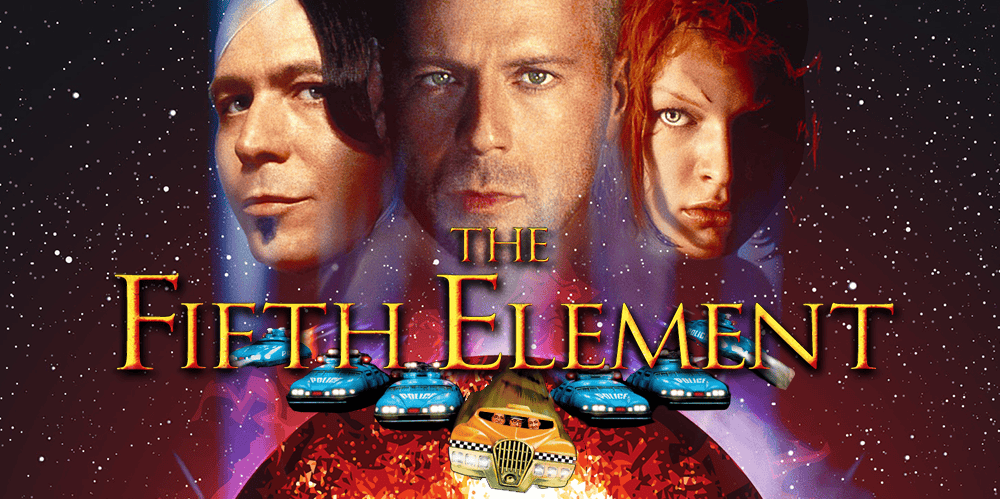
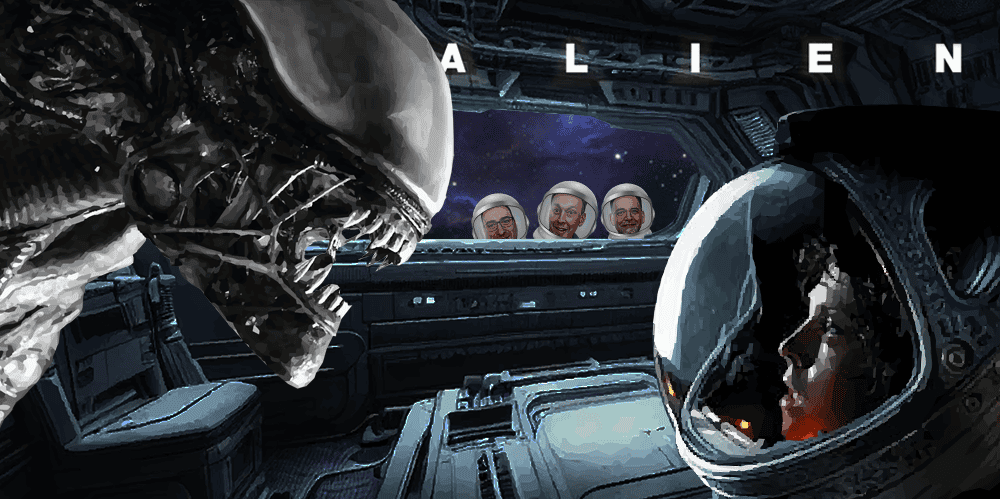
Other movies reviewed by 3 Guys and a Flick that fans of 12 Monkeys tend to love — all rated above 3.5.
↑ Return to Top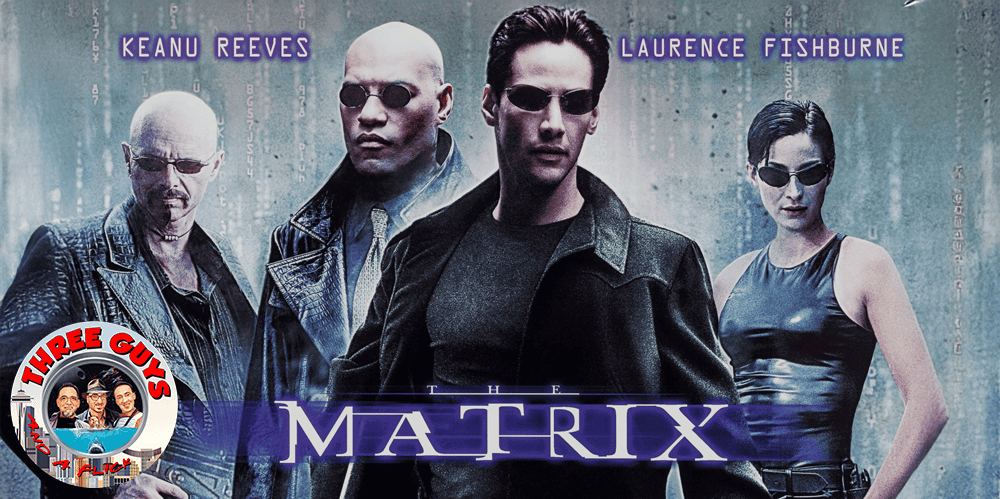


Sources Cited
3 Guys and a Flick - Latest Episode
3 Guys and a Flick - Ratings
IMDb - 12 Monkeys
IMDb - Full Cast & Crew
IMDb - Awards
IMDb - Quotes
IMDb - Taglines
IMDb - Soundtrack
IMDb - Filming Locations
IMDb - Trivia
Box Office Mojo - 12 Monkeys
The Numbers - 12 Monkeys
Rotten Tomatoes - 12 Monkeys
Metacritic - 12 Monkeys
Wikipedia - 12 Monkeys
Show notes generated July 29, 2026. Content reflects information available at time of generation.
↑ Return to Top