Details
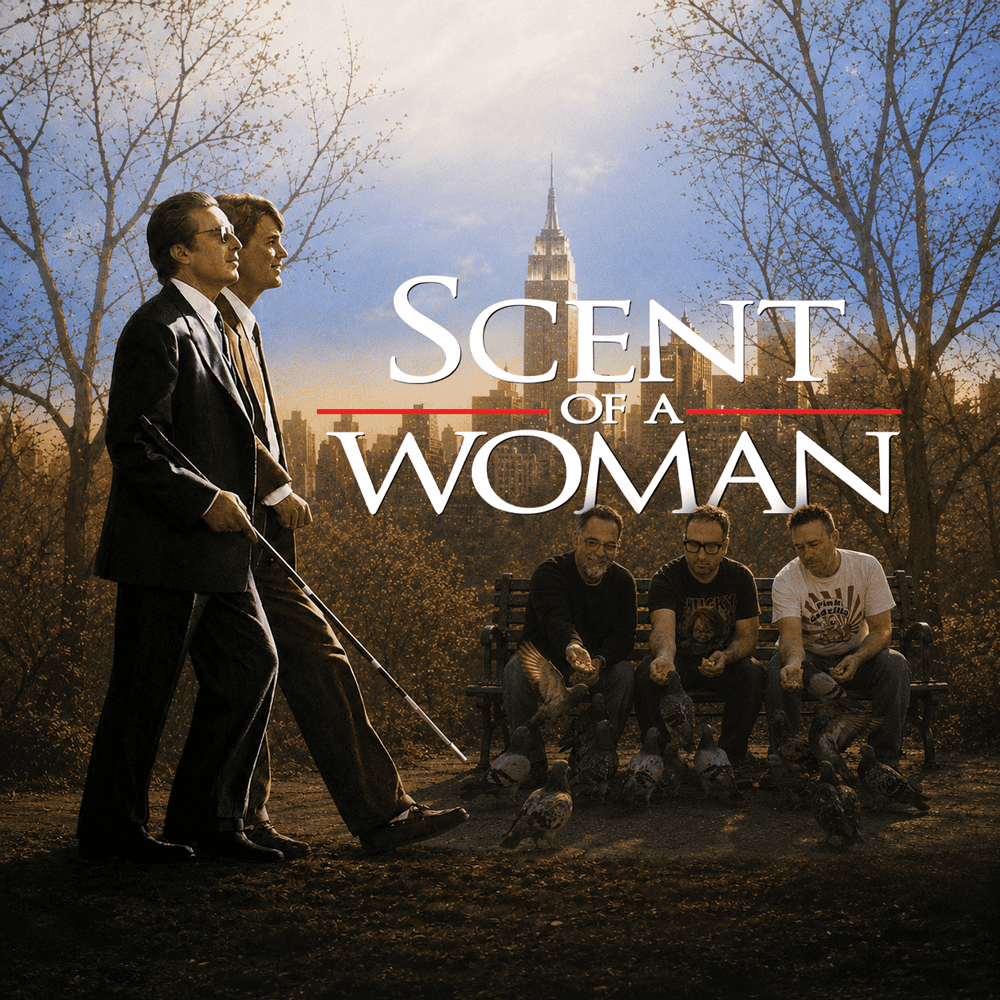
Movie TitleScent of a Woman
Release DateDecember 23, 1992
TaglineCol. Frank Slade has a very special plan for the weekend.
Runtime156 minutes
DirectorMartin Brest
Screenplay Written ByBo Goldman
Based OnThe Italian novel Il buio e il miele by Giovanni Arpino and the 1974 Italian film Profumo di donna
Is It a Remake?Yes. It is an American remake/adaptation connected to Profumo di donna.
BudgetApproximately $31 million
Box OfficeApprox. $63.1 million domestic / Approx. $134.1 million worldwide
Main Cast
Al PacinoLt. Col. Frank Slade
Chris O’DonnellCharlie Simms
James RebhornMr. Trask
Gabrielle AnwarDonna
Philip Seymour HoffmanGeorge Willis, Jr.
Richard VentureW. R. Slade
Bradley WhitfordRandy
Ron EldardOfficer Gore
Rochelle OliverGretchen
Awards
⭐ Academy Award Winner — Best Actor in a Leading Role, Al Pacino
⭐ Academy Award Nominee — Best Picture, Martin Brest, Producer
⭐ Academy Award Nominee — Directing, Martin Brest
⭐ Academy Award Nominee — Writing, Screenplay Based on Material Previously Produced or Published, Bo Goldman
⭐ Golden Globe Winner — Best Motion Picture, Drama
⭐ Golden Globe Winner — Best Actor, Drama, Al Pacino
⭐ Golden Globe Winner — Best Screenplay, Bo Goldman
⭐ Golden Globe Nominee — Best Supporting Actor, Chris O’Donnell
Short Plot Summary
Charlie Simms, a scholarship student at an elite prep school, takes a Thanksgiving weekend job assisting retired, blind Army Lieutenant Colonel Frank Slade. Frank unexpectedly takes Charlie to New York City for a lavish, volatile weekend involving fine dining, a tango, a Ferrari ride, and a darker personal plan. As Charlie faces a moral crisis back at school, his time with Frank forces both men to confront pride, integrity, loneliness, and courage.
↑ Return to Top
Key Quotes
“Hoo-ah!” — Frank Slade
“I’m in the dark here!” — Frank Slade
“If I were the man I was five years ago, I’d take a flamethrower to this place!” — Frank Slade
“There is nothing like the sight of an amputated spirit.” — Frank Slade
“No mistakes in the tango, not like life.” — Frank Slade
Trivia
Director
- Martin Brest both directed and produced Scent of a Woman.
- AFI identifies Brest as an AFI Conservatory alumnus, class of 1973.
- The film’s production began December 3, 1991, according to AFI Catalog notes.
- Brest came to the film after major commercial success with Beverly Hills Cop and Midnight Run, making this a more character-driven prestige drama in his filmography.
Cast / Casting
- Al Pacino won his first Academy Award for this role after seven previous Oscar nominations.
- Chris O’Donnell received a Golden Globe nomination for Best Supporting Actor for playing Charlie Simms.
- Philip Seymour Hoffman appears under the credit Philip S. Hoffman as George Willis Jr.
- Pacino’s repeated “Hoo-ah!” became the movie’s signature verbal tic and one of the most quoted parts of the performance.
Soundtrack / Score
- The score was composed by Thomas Newman.
- The famous tango scene uses “Por una Cabeza,” the Carlos Gardel and Alfredo Le Pera tango.
- The music supports the movie’s mix of prep-school pressure, New York elegance, and Frank Slade’s internal volatility.
- Unlike many early-1990s dramas, the film is remembered less for a pop soundtrack and more for Newman’s score and the unforgettable tango sequence.
Location
- New York City locations included the Plaza Hotel’s Oak Room, the Waldorf-Astoria Hotel, and the Pierre Hotel.
- The tango scene was filmed at the Pierre Hotel, located at 2 East 61st Street at Fifth Avenue.
- Frank and Charlie’s elegant dining scene was filmed in the Oak Room at the Plaza Hotel.
- AFI notes that some filming in active New York hotel locations took place at night to avoid disrupting normal business.
Behind-The-Scenes
- AFI reports that production was briefly delayed after Pacino suffered a ruptured blood vessel in his eye after tripping over a shrub on Park Avenue.
- The film was adapted by Bo Goldman from Italian source material connected to both Giovanni Arpino’s novel and Dino Risi’s 1974 film Profumo di donna.
- The story turns a Thanksgiving weekend job into both a character study and a moral test for Charlie Simms.
- The film grossed approximately $134.1 million worldwide against an estimated $31 million budget.
Nostalgia
- For many viewers, this is the movie that turned “Hoo-ah!” into full-blown Pacino shorthand.
- The movie’s school hearing finale became one of the defining inspirational speech scenes of early-1990s drama.
- The tango scene remains one of the film’s most recognizable sequences, especially because Frank’s confidence contrasts with Donna’s uncertainty.
- The film sits squarely in the era of long, awards-season character dramas where one giant performance could carry the whole room.
Easter Eggs
- The title connects back to the Italian source film Profumo di donna, meaning “scent of a woman.”
- Frank’s ability to identify women by scent ties the title directly to the character’s heightened sensory awareness.
- The Ferrari scene reverses the expected power dynamic: Charlie can see, but Frank is the one pushing the ride forward.
- The prep-school conflict gives the movie a coming-of-age moral-drama structure while Frank’s New York trip gives it a contained road-movie feel.
Misc.
- Scent of a Woman was released domestically on December 23, 1992.
- The film received four Academy Award nominations and won one Oscar: Best Actor for Al Pacino.
- The Numbers lists the movie as a foreign-language remake and identifies Universal Pictures and City Light as production/financing companies.
- Your 3 Guys and a Flick ratings page lists the episode as Episode 262, with an average rating of 4.5.
Sources Cited
3 Guys and a Flick — Podcast 262: Scent of a Woman
3 Guys and a Flick — Ratings
IMDb — Scent of a Woman
IMDb — Scent of a Woman Full Cast & Crew
IMDb — Scent of a Woman Awards
IMDb — Scent of a Woman Quotes
AFI Catalog — Scent of a Woman
Oscars.org — 65th Academy Awards
Box Office Mojo — Scent of a Woman
The Numbers — Scent of a Woman
Wikipedia — Scent of a Woman
Movie-Locations.com — Scent of a Woman Filming Locations
↑ Return to Top