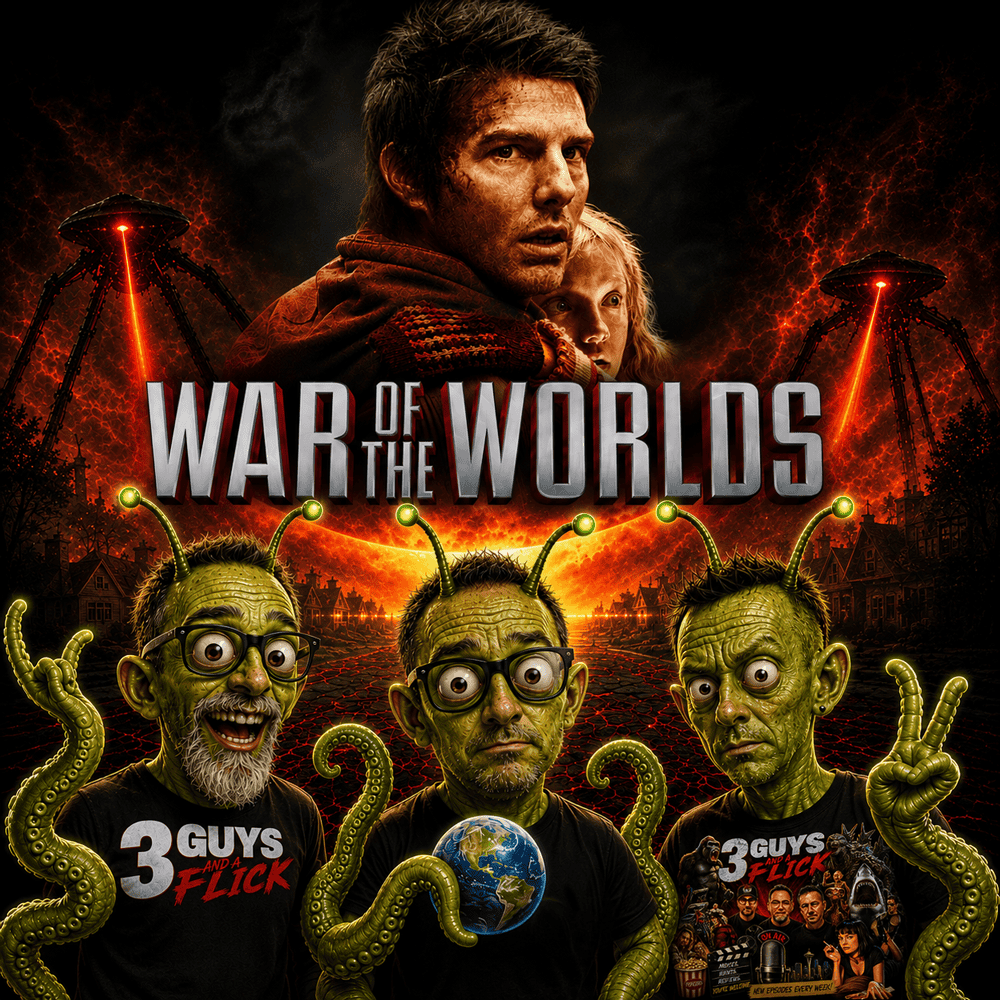
Details
Movie TitleWar of the Worlds
Release DateJune 23, 2005 (world premiere); June 29, 2005 (wide US theatrical release)
Tagline"They're already here."
Runtime116 min / 1 hr 56 min
DirectorSteven Spielberg
ScreenplayJosh Friedman & David Koepp
Based OnThe War of the Worlds (1898 novel) by H.G. Wells
CinematographerJanusz Kamiński
Country of OriginUnited States
Sequel / FranchiseStand-alone adaptation; one of several film versions of Wells' novel (previously adapted in 1953)
Budget~$132 million
Box Office$234.3 million domestic / $591.7 million worldwide — a massive commercial success that more than quadrupled its production budget globally
Rotten Tomatoes75% Critics / 60% Audience
Metacritic73 / 100 · 6.5 User
IMDb Rating6.5/10
MPAA RatingPG-13 — for frightening sequences of sci-fi violence and disturbing imagery
Content WarningsIntense sci-fi violence and destruction, disturbing imagery of mass casualties (human disintegration), loud jump-scare sequences, themes of parental abandonment, brief strong language, child-in-peril scenarios
Where to WatchParamount+; available for rent/purchase on Prime Video, Apple TV+, Vudu, and Google Play (availability may vary by region)
Main Cast
Tom CruiseRay Ferrier
Dakota FanningRachel Ferrier
Justin ChatwinRobbie Ferrier
Miranda OttoMary Ann
Tim RobbinsHarlan Ogilvy
Rick GonzalezVincent
Yul VázquezJulio
Lenny VenitoManny the Mechanic
Lisa Ann WalterNeighbor
Ann RobinsonGrandmother (cameo)
Gene BarryGrandfather (cameo)
David Alan BascheTim (Mary Ann's husband)
Awards
⭐ Academy Awards (Oscars) — Best Visual Effects — Nominated — 2006
⭐ Academy Awards (Oscars) — Best Sound Mixing — Nominated — 2006
⭐ Academy Awards (Oscars) — Best Sound Editing — Nominated — 2006
⭐ Saturn Awards — Best Science Fiction Film — Won — 2006
⭐ Saturn Awards — Best Director (Steven Spielberg) — Nominated — 2006
⭐ Saturn Awards — Best Performance by a Younger Actor (Dakota Fanning) — Nominated — 2006
⭐ MTV Movie Awards — Best On-Screen Team (Tom Cruise & Dakota Fanning) — Nominated — 2006
⭐ Visual Effects Society — Outstanding Visual Effects in a Motion Picture — Nominated — 2006
Plot Summary
Ray Ferrier (Tom Cruise) is a divorced, working-class dockworker in New Jersey who has a strained relationship with his two children, Robbie (Justin Chatwin) and Rachel (Dakota Fanning), when they come to stay with him for a weekend. Without warning, massive electromagnetic pulses disable all electronics and gargantuan alien tripod machines — buried beneath the Earth for millennia — erupt from the ground, unleashing devastating heat-ray attacks that reduce humans to ash. Ray desperately shepherds his children southward through waves of panicked refugees, military resistance, and relentless alien assault, struggling both to survive and to redeem himself as a father. The family's flight brings them into a harrowing encounter with a disturbed survivalist named Ogilvy (Tim Robbins) in a basement, where Ray must make a brutal moral choice to protect his daughter. Ultimately, after seemingly unstoppable carnage, the alien invaders are defeated not by human weapons but by Earth's common bacteria, against which they have no immunity — echoing H.G. Wells' original conclusion — and Ray's family is reunited in Boston, survivors of an extinction-level event.
↑ Return to Top
Key Quotes
"This is not a war any more than there's a war between men and maggots. This is an extermination." — Harlan Ogilvy
"Is it the terrorists?" — Rachel Ferrier
"I need you to not be scared. Can you do that for me?" — Ray Ferrier
"They've been planning this for a million years." — Ray Ferrier
"No matter how it seems, they came from somewhere else. From out there." — Ray Ferrier (narrating)
"Humankind is a survivor. We're going to survive this." — Ray Ferrier
Trivia
Director
- Steven Spielberg shot the film in just 72 days, completing principal photography in late 2004 and early 2005 — an extraordinarily fast pace for a major effects-driven blockbuster.
- Spielberg deliberately set the story on the East Coast rather than the West Coast to give the film a different feel from typical disaster movies, which tend to destroy Los Angeles or New York landmarks.
- The director drew thematic inspiration from post-9/11 anxiety, intentionally invoking imagery of falling ash, desperate refugees, and missing-persons flyers that echoed America's collective trauma.
- Spielberg and Tom Cruise used the production to reunite after working together on Minority Report (2002), developing a strong creative shorthand that helped accelerate the compressed shooting schedule.
- Spielberg chose to keep the alien design largely obscured for much of the film, emphasizing fear of the unknown — a storytelling technique he has employed since Jaws.
Cast / Casting
- Dakota Fanning, just ten years old during filming, was widely praised for her intensely emotional performance; her screaming scenes were so realistic that crew members reportedly found them distressing on set.
- Ann Robinson and Gene Barry, stars of the original 1953 War of the Worlds film, make cameo appearances as the grandparents of Ray's children in the Boston reunion scene — a loving nod to the source material's legacy.
- Tim Robbins improvised several of his unsettling lines as Ogilvy, and Spielberg encouraged him to push the character's instability as far as he felt comfortable.
- Tom Cruise performed many of his own running sequences and physically demanding stunts, insisting on authenticity for Ray's desperate flight scenes.
- Justin Chatwin was cast partially because of his ability to portray believable teenage contempt and vulnerability, which Spielberg felt was critical to making Ray's fractured family dynamic feel real.
Soundtrack / Score
- John Williams composed the score, marking his sixth consecutive collaboration with Spielberg on a major blockbuster, maintaining one of the most celebrated composer-director partnerships in Hollywood history.
- Williams used a large orchestra augmented with electronic textures to create the alien tripods' iconic foghorn-like sound, which was a heavily processed combination of orchestral bass instruments and synthesizers.
- The tripod "BWONG" attack sound — widely imitated in later sci-fi trailers — was created by the sound design team and became one of the most recognizable sound effects of 2000s cinema.
- Williams deliberately avoided a triumphant, heroic score for most of the film, instead keeping the music sparse and dread-inducing to reinforce the story's ground-level survival perspective.
Location
- Principal photography took place primarily in Los Angeles, California, with key scenes shot in Windsor, Ontario, Canada, and on locations in New Jersey, Virginia, and Connecticut to capture the East Coast setting.
- The famous ferry-crossing sequence was filmed on the Hudson River near Bayonne, New Jersey, using practical effects to capsize the vessel — one of the largest practical stunts in the production.
- The suburban neighborhood destruction sequence near the beginning was filmed on a purpose-built set in Los Angeles that was demolished in a single take for maximum cinematic impact.
- The Boston exteriors used in the final reunion scene were filmed on location in the city, providing authentic architectural character to the devastated but surviving urban landscape.
Behind-The-Scenes
- The production began before the script was fully finalized — Spielberg and the writers worked simultaneously on the screenplay and pre-production, an unusual process driven by the desire to hit the June 2005 release date.
- ILM (Industrial Light & Magic) created the alien tripods entirely in CGI; the team studied real-world military machines, insects, and deep-sea creatures to inform the tripods' unsettling biomechanical movement.
- The sequence in which Ray watches the burning train race through a crossing was achieved with a real train set on fire — one of the most striking practical effects in the film.
- Approximately 40% of the film's budget went toward visual effects, with ILM completing over 550 visual effects shots for the final cut.
- To preserve the sense of claustrophobic dread, Spielberg kept the camera close to Tom Cruise and Dakota Fanning throughout much of the film, deliberately limiting wide establishing shots of the alien attack.
Nostalgia
- The film is a modern adaptation of H.G. Wells' 1898 serialized novel, itself one of the first and most influential works of science fiction ever written — a story that has been reimagined in radio, TV, film, and music for over a century.
- Orson Welles' legendary 1938 radio broadcast dramatization of the novel famously caused widespread panic among listeners who tuned in late and believed the Martian invasion was real news reporting.
- The 1953 film adaptation, produced by George Pal, is considered a classic of 1950s sci-fi cinema and won an Academy Award for its special effects; Spielberg's version pays homage to it through the cameos of its stars.
- Jeff Wayne's 1978 musical album Jeff Wayne's Musical Version of The War of the Worlds remains enormously popular in the UK and further cemented the story's cultural staying power across generations.
Easter Eggs
- The cameo appearances of Ann Robinson and Gene Barry — stars of the 1953 adaptation — in the film's final scene serve as a direct Easter egg acknowledging the original cinematic version of the story.
- A poster for the original 1953 War of the Worlds film can be briefly spotted in the background of an early scene, a subtle nod to its predecessor.
- Morgan Freeman's narration at the opening and close of the film quotes directly from H.G. Wells' original novel text, grounding the modern blockbuster in its 19th-century literary source.
- The lightning-strike scene that first reveals a tripod contains a visual nod to the alien ship emerging from beneath the earth in the 1953 version, albeit redesigned for the modern aesthetic.
Misc.
- Morgan Freeman narrates the film's bookending passages but does not appear on screen — his authoritative voice was chosen to give the story a timeless, almost biblical gravitas.
- The film was released the same summer as Batman Begins, Charlie and the Chocolate Factory, and Fantastic Four, making the summer of 2005 one of the most blockbuster-saturated in Hollywood history.
- Despite mixed audience reception to the ending, the film grossed $591.7 million worldwide, making it the 4th highest-grossing film of 2005 globally.
- The movie sparked considerable debate among critics and audiences about whether the abrupt, convenient ending — faithful to Wells' novel — was satisfying or anticlimactic in a modern cinematic context.
- Spielberg has described the film as one of his most personal, citing the divorce subplot and Ray's arc as a neglectful father struggling to reconnect as rooted in themes he finds universally human and emotionally resonant.
Soundtrack
War of the Worlds (Original Motion Picture Soundtrack) John Williams · 36 tracks · 1:14:23
1
Prologue
John Williams
2:25
2
The Ferry Scene
John Williams
3:18
3
Docking at Bayonne
John Williams
1:44
4
The Reunion
John Williams
2:06
5
Alone in the Universe
John Williams
3:28
6
The Return
John Williams
1:52
7
Frantic Escape
John Williams
2:47
8
Robbie's Sendoff
John Williams
1:58
9
What's Out There?
John Williams
3:04
10
Attack on the Highway
John Williams
2:33
11
Escape from the House
John Williams
3:12
12
The Intersection
John Williams
2:08
13
I'll Find Them
John Williams
1:56
14
Probing the Cellar
John Williams
4:17
15
Bloodvine
John Williams
2:44
16
The Cellar (Ogilvy's Madness)
John Williams
3:31
17
Escape from the Cellar
John Williams
2:19
18
Captured
John Williams
3:06
19
Ray's Plan
John Williams
1:43
20
Escape from the Basket
John Williams
2:28
21
The Confrontation
John Williams
1:54
22
Reaching Boston
John Williams
2:11
23
The Fighting Machine Attacks
John Williams
2:43
24
The Machine Falters
John Williams
1:38
25
Epilogue
John Williams
3:47
—
Additional tracks — full tracklist unverified
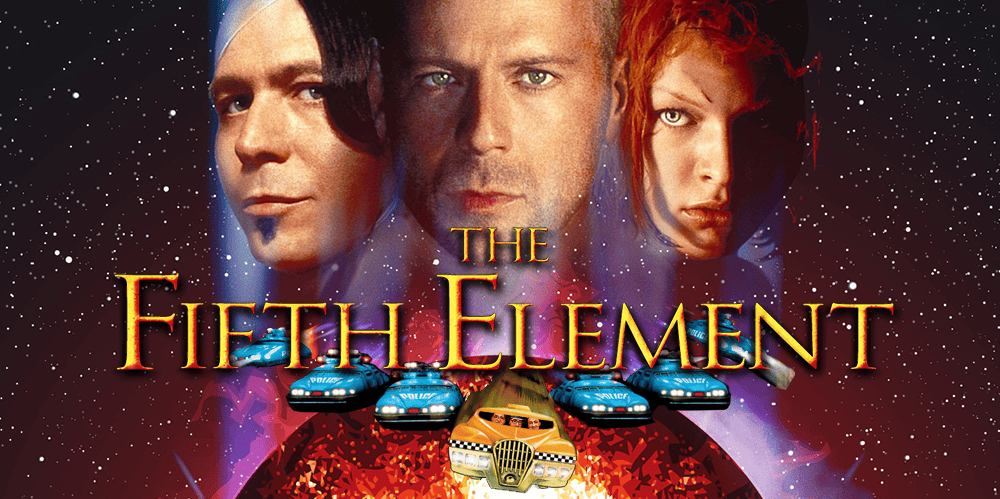
If You Liked This, Watch Next
Other movies reviewed by 3 Guys and a Flick that fans of War of the Worlds tend to love — all rated above 3.5.
↑ Return to Top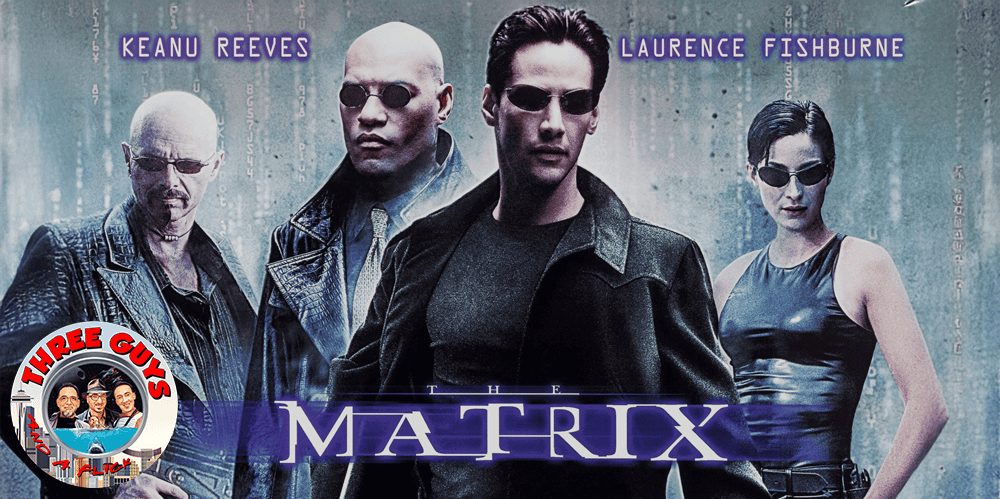


Sources Cited
3 Guys and a Flick - Latest Episode
3 Guys and a Flick - Ratings
IMDb - War of the Worlds
IMDb - Full Cast & Crew
IMDb - Awards
IMDb - Quotes
IMDb - Taglines
IMDb - Soundtrack
IMDb - Filming Locations
IMDb - Trivia
Box Office Mojo - War of the Worlds
The Numbers - War of the Worlds
Rotten Tomatoes - War of the Worlds
Metacritic - War of the Worlds
Wikipedia - War of the Worlds
Show notes generated September 2, 2026. Content reflects information available at time of generation.
↑ Return to Top