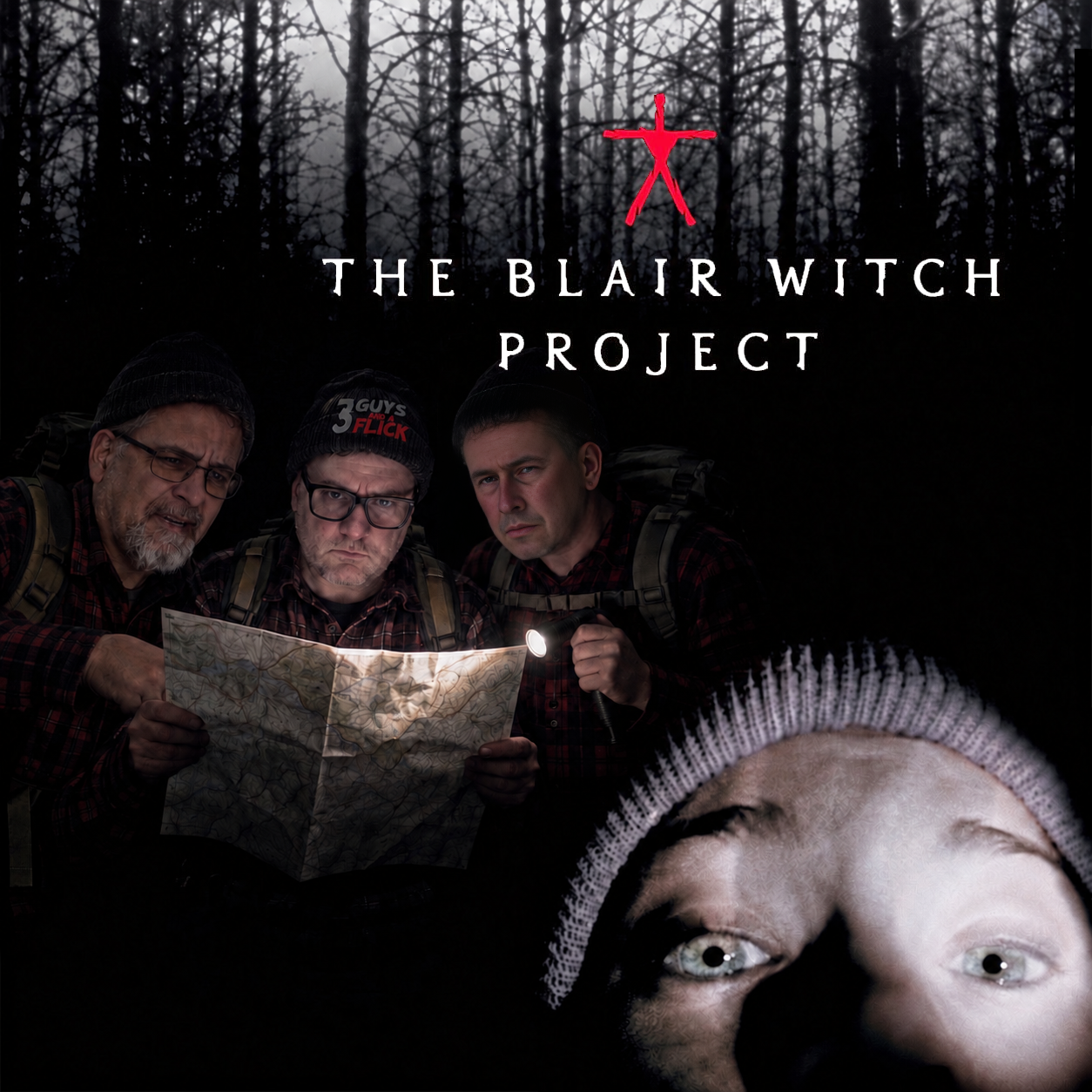
Details
Movie TitleThe Blair Witch Project
Release DateJanuary 25, 1999 (Sundance Film Festival); July 14, 1999 (limited); July 30, 1999 (wide US release)
Tagline"In October of 1994, three student filmmakers disappeared in the woods near Burkittsville, Maryland while shooting a documentary. A year later their footage was found."
Runtime81 min / 1h 21m
DirectorDaniel Myrick & Eduardo Sánchez
ScreenplayDaniel Myrick & Eduardo Sánchez
Based OnOriginal screenplay; inspired by local legend of the Blair Witch, a fictional Maryland folk horror mythology created by the filmmakers
CinematographerNeal Fredericks (directors of photography); also shot by the cast themselves on Hi-8 video and 16mm film
Country of OriginUnited States
Sequel / FranchiseFirst entry in the Blair Witch franchise; followed by Book of Shadows: Blair Witch 2 (2000) and Blair Witch (2016)
BudgetApproximately $60,000 (production); up to $750,000 after post-production costs
Box Office$29.2 million domestic / $248.6 million worldwide — one of the most profitable films ever made relative to its budget, earning thousands of times its production cost
Rotten Tomatoes86% Critics / 57% Audience
Metacritic81 / 100 · 6.5 User
IMDb Rating6.5/10
MPAA RatingR — for language
Content WarningsStrong pervasive language, psychological terror and dread, frightening imagery, depictions of extreme fear and distress, brief implied violence, themes of isolation and paranoia
Where to WatchAvailable for rent/purchase on Amazon Prime Video, Apple TV+, Vudu, Google Play, and other major digital platforms; check local availability
Main Cast
Heather DonahueHeather Donahue
Joshua LeonardJoshua Leonard
Michael C. WilliamsMichael Williams
Bob GriffinInterview Subject
Jim KingInterview Subject
Sandra SanchezBurkittsville Resident
Ed SwansonFisherman
Patricia DeCouMary Brown
Mark MasonCemetery Caretaker
Jackie HallexInterview Subject
Awards
⭐ Independent Spirit Awards — Best First Feature — Won — 2000
⭐ Independent Spirit Awards — Best First Screenplay (Daniel Myrick, Eduardo Sánchez) — Nominated — 2000
⭐ MTV Movie Awards — Best Movie — Nominated — 2000
⭐ MTV Movie Awards — Best Female Performance (Heather Donahue) — Nominated — 2000
⭐ Saturn Awards (Academy of Science Fiction, Fantasy & Horror Films) — Best Horror Film — Nominated — 2000
⭐ Sundance Film Festival — Audience Award (Dramatic) — Won — 1999
⭐ Fangoria Chainsaw Awards — Best Wide-Release Film — Won — 2000
⭐ National Board of Review — Top Independent Films — Selected — 1999
Plot Summary
In October 1994, three student filmmakers — Heather Donahue, Joshua Leonard, and Michael Williams — travel to Burkittsville, Maryland to shoot a documentary about a local legend known as the Blair Witch, said to haunt the surrounding Black Hills forest. After conducting interviews with local residents about a string of child murders and mysterious disappearances tied to the legend, the trio hikes into the woods and quickly becomes lost. As night after night passes, strange noises surround their camp, unsettling stick figures appear hanging from the trees, and their map goes missing, sending the group into escalating panic and bitter conflict. Their footage, presented as recovered documentary material, captures their mental and physical deterioration as an unseen supernatural force closes in around them. The film ends with a harrowing final sequence inside an abandoned house, after which the camera falls and goes dark — leaving the fate of all three filmmakers ambiguous and deeply disturbing.
↑ Return to Top
Key Quotes
"I'm scared to close my eyes, I'm scared to open them! We're gonna die out here!" — Heather Donahue
"I just want to apologize to Josh's mom, and Mike's mom, and my mom. I am so sorry. Because it was my fault. I was the one who brought us out here. I was the one that said 'keep going south.' We're going to catch something on film. I am so sorry to everyone." — Heather Donahue
"Which way is south?!" — Michael Williams
"I don't know — everything looks the same! The map doesn't work here!" — Heather Donahue
"That was the most horrible sound I've ever heard in my life... and I don't want to hear it again." — Heather Donahue
"Josh, I'm not sure if you're screwing around or not, but I'm really, genuinely scared right now." — Heather Donahue
Trivia
Director
- Daniel Myrick and Eduardo Sánchez co-directed the film after meeting at the University of Central Florida's film school, where they developed the Blair Witch mythology together.
- The directors communicated with the cast during filming by leaving notes, food, and directions in their supply caches rather than directly directing them on set, preserving the authentic fear and improvisation.
- Myrick and Sánchez deliberately kept the three lead actors largely in the dark about what would happen to them each day, progressively reducing their food rations to heighten genuine irritability and anxiety on camera.
- The duo wrote a 35-page document called the "Blair Witch Mythology" to give interviewers and locals enough backstory to make their on-camera responses believable without actors reading from a script.
- Despite the film's enormous success, neither Myrick nor Sánchez directed the sequels; Sánchez later returned to horror with Exists (2014), another found-footage creature feature.
Cast / Casting
- Heather Donahue, Joshua Leonard, and Michael C. Williams were all relatively unknown actors chosen in part because they were willing to operate their own cameras and improvise dialogue for eight days in the Maryland woods.
- The actors used their real first names in the film to further blur the line between fiction and reality, reinforcing the mockumentary premise.
- Heather Donahue's mother reportedly received condolence cards from people who believed the film was real footage and that her daughter had actually died in the woods.
- The iconic "nose-cam" confessional scene, in which Heather tearfully apologizes to the camera, was entirely improvised by Donahue — the directors gave her no specific directions for that moment.
- Joshua Leonard and Michael Williams carried and operated their own cameras throughout filming, contributing to the raw, unstable look of the footage.
Soundtrack / Score
- The film has virtually no traditional musical score; the absence of music was a deliberate creative decision to heighten realism and dread.
- Sound design played a crucial role, with the filmmakers creating ominous off-camera noises — snapping branches, children laughing, and indistinct wailing — to torment both the characters and the audience.
- Tony Cora received a music credit for the film; any incidental music is extremely minimal and atmospheric rather than traditional scoring.
- The film's sound mix was praised by horror critics as one of its most effective tools — what is not seen or heard clearly is far more terrifying than anything explicitly shown.
- The lack of a bombastic horror score was cited by reviewers as one of the key elements that distinguished the film from mainstream studio horror of the era.
Location
- Principal photography took place in Seneca Creek State Park and Patapsco Valley State Park in Maryland, chosen to stand in for the fictional Black Hills Forest near Burkittsville.
- The town of Burkittsville, Maryland is a real place, and after the film's release the small town was overwhelmed by tourists and horror fans seeking out filming locations, to the considerable frustration of local residents.
- The actors were genuinely hiking and camping in the woods throughout production, and the crew tracked their movements via GPS, planting props and stimuli around the camps during the day while the actors slept.
- The final house sequence was filmed at an abandoned property in Granite, Maryland, near Patapsco Valley State Park.
- The crew spent eight days shooting in the woods under real outdoor conditions, using the natural terrain, weather, and isolation to elicit authentic performances from the actors.
Behind-The-Scenes
- The total raw footage shot during production amounted to approximately 20 hours of Hi-8 video and 16mm film, which editors John Berlinger and others helped condense into the 81-minute final cut.
- The film's marketing campaign was groundbreaking — its website, launched in 1998, presented the Blair Witch as a real legend and Heather, Josh, and Mike as genuinely missing persons, making it one of the first major viral marketing campaigns in internet history.
- Artisan Entertainment acquired the film at Sundance for approximately $1.1 million after a fierce bidding war, then invested heavily in its revolutionary internet marketing.
- The stick figures seen hanging in trees were built by the crew and placed overnight; the actors' frightened reactions upon finding them each morning were entirely genuine.
- Many crew members and studio executives initially doubted the film could be sold to a mainstream audience given its rough, handheld aesthetic and lack of traditional monster reveals.
Nostalgia
- The Blair Witch Project is widely credited with popularizing the "found footage" horror subgenre, directly inspiring dozens of imitators including Paranormal Activity (2007), Cloverfield (2008), and REC (2007).
- The film debuted in an era when the internet was still new enough that a large segment of the audience genuinely believed, or half-believed, they were watching real recovered footage.
- Its 1999 summer release made it a cultural phenomenon of the pre-social-media era — word-of-mouth spread in a way that felt organic and terrifying rather than manufactured.
- For many viewers who saw it in theaters in 1999, the experience of watching it in a dark cinema — not knowing what was real — remains one of the most genuinely frightening moviegoing experiences of their lives.
- The film's influence on independent filmmaking was profound, demonstrating that a compelling concept, effective marketing, and raw authenticity could overcome any technical limitation.
Easter Eggs
- The stick figures that menace the campers were inspired by similar effigies described in real-world folk horror traditions, particularly those associated with pagan ritual imagery, lending the film an air of plausible folklore.
- The opening title card misspells "Burkittsville" as "Burkitsville" in some early prints — a small error that slipped through given the film's micro-budget production.
- The brief glimpse of a hand print on the wall of the abandoned house in the final sequence is framed to evoke children's handprints, tying back to the mythology of the child murders attributed to the Blair Witch.
- The "I'm so scared" confessional is filmed in extreme close-up so that Heather's face is partially cut off by the frame — a visual choice that makes the audience feel as trapped and disoriented as she is.
- The Rustin Parr mythology referenced in the film (a hermit who murdered children in the 1940s and who always faced his victims toward a corner before killing them) directly sets up the disturbing final image of Michael standing in the corner of the basement.
Misc.
- With a production budget of around $60,000 and worldwide gross of approximately $248.6 million, The Blair Witch Project is one of the highest return-on-investment films in cinema history, beaten only by a small number of productions.
- The film was selected for preservation in the United States National Film Registry by the Library of Congress in 2010, being deemed "culturally, historically, or aesthetically significant."
- In 1999, Entertainment Weekly ranked the film's marketing campaign as one of the most effective in Hollywood history, noting that the website had received tens of millions of hits before the film's wide release.
- The three lead actors were each paid approximately $500 per week during production, plus a small percentage of the eventual profits once the film became a blockbuster hit.
- The MPAA rated the film R solely for language — a fact that underscores how effectively the film generated terror through suggestion and atmosphere rather than graphic violence or gore.
Soundtrack
The Blair Witch Project (Original Motion Picture Soundtrack) Tony Cora · 23 tracks · 52:47
1
The Blair Witch Project
Tony Cora
2:18
2
Rustin Parr
Tony Cora
2:44
3
In the Woods
Tony Cora
2:31
4
The Legend
Tony Cora
2:05
5
Coffin Rock
Tony Cora
2:22
6
The Map
Tony Cora
1:58
7
Lost
Tony Cora
2:47
8
The Stick Men
Tony Cora
2:14
9
Night Sounds
Tony Cora
3:02
10
The Book of Shadows
Tony Cora
2:19
11
Heather's Confession
Tony Cora
2:41
12
Going in Circles
Tony Cora
2:08
13
The Bundles
Tony Cora
1:57
14
Missing
Tony Cora
2:33
15
The Cellar
Tony Cora
2:26
16
The House
Tony Cora
2:55
17
Standing in the Corner
Tony Cora
2:38
18
The Blair Witch (Reprise)
Tony Cora
2:11
—
Additional tracks — full tracklist unverified
If You Liked This, Watch Next
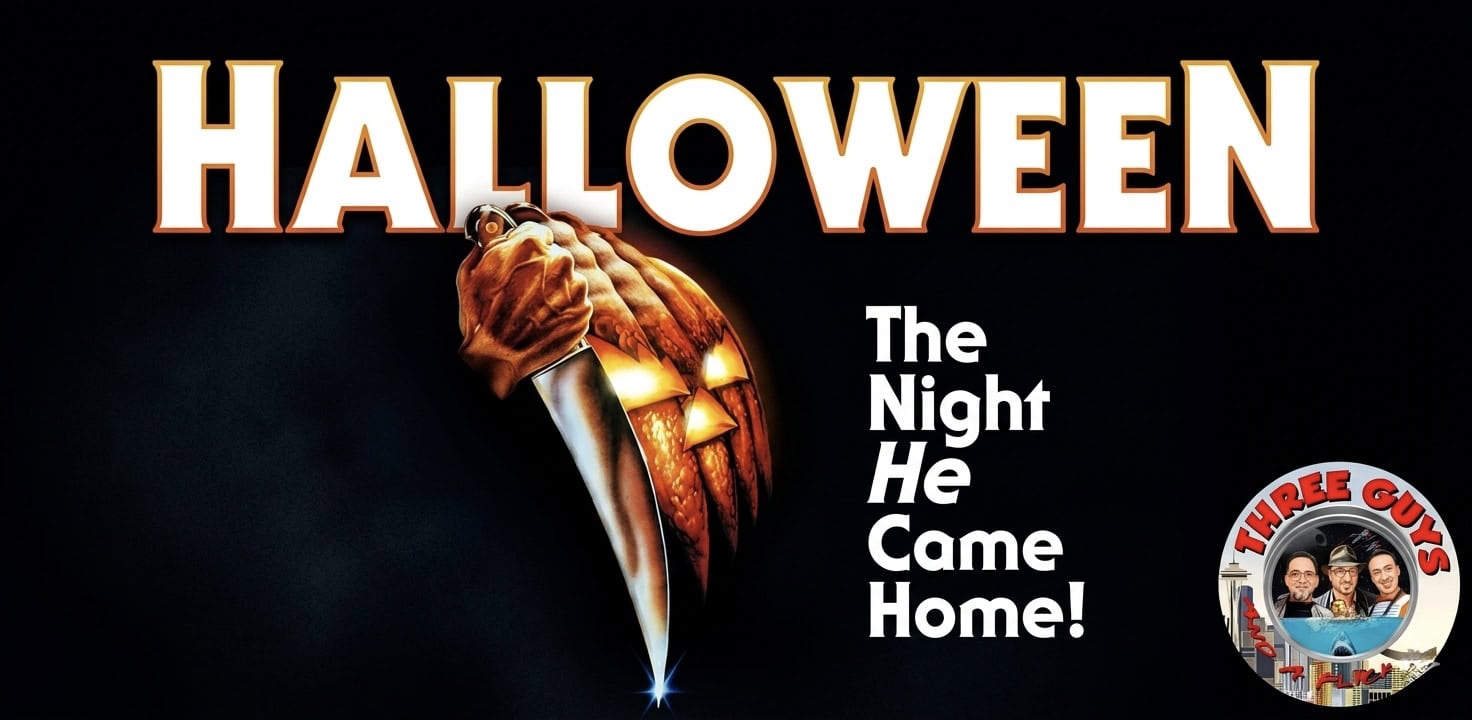
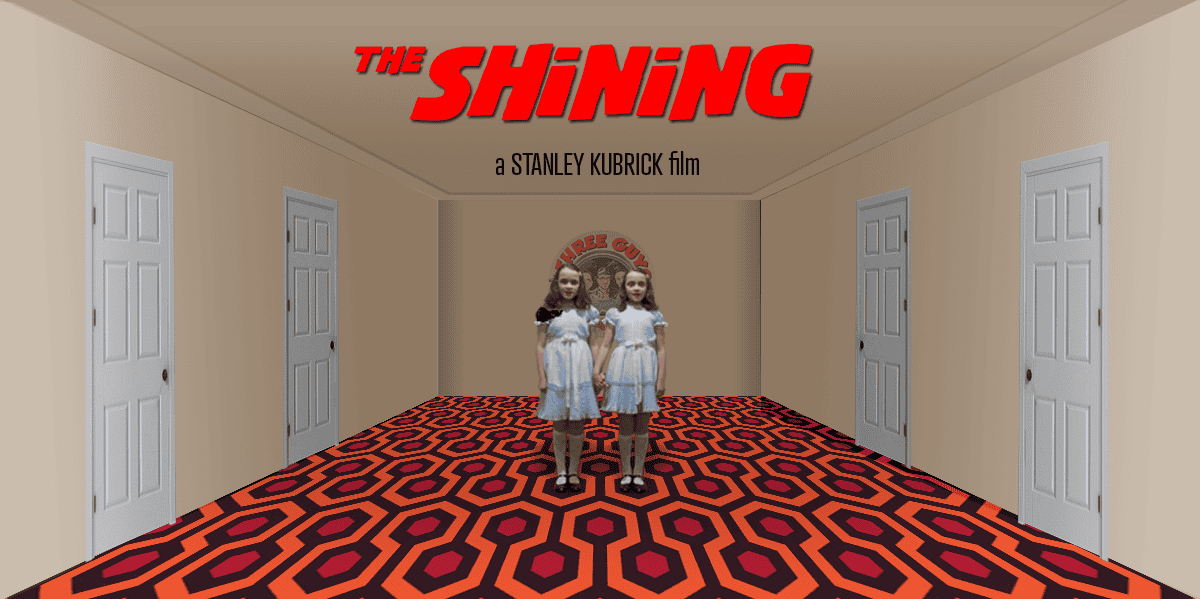
Other movies reviewed by 3 Guys and a Flick that fans of The Blair Witch Project tend to love — all rated above 3.5.
↑ Return to Top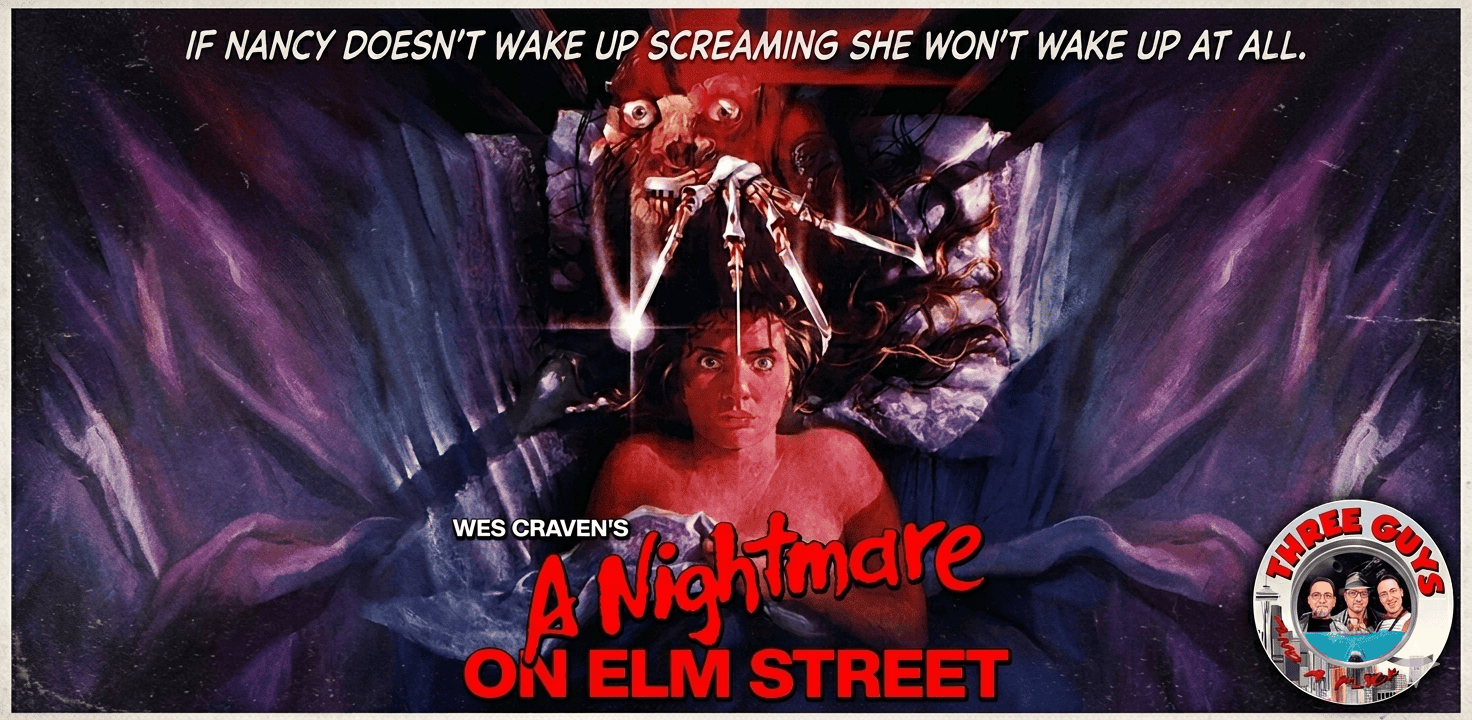
Sources Cited
3 Guys and a Flick - Latest Episode
3 Guys and a Flick - Ratings
IMDb - The Blair Witch Project
IMDb - Full Cast & Crew
IMDb - Awards
IMDb - Quotes
IMDb - Taglines
IMDb - Soundtrack
IMDb - Filming Locations
IMDb - Trivia
Box Office Mojo - The Blair Witch Project
The Numbers - The Blair Witch Project
Rotten Tomatoes - The Blair Witch Project
Metacritic - The Blair Witch Project
Wikipedia - The Blair Witch Project
Show notes generated October 14, 2026. Content reflects information available at time of generation.
↑ Return to Top