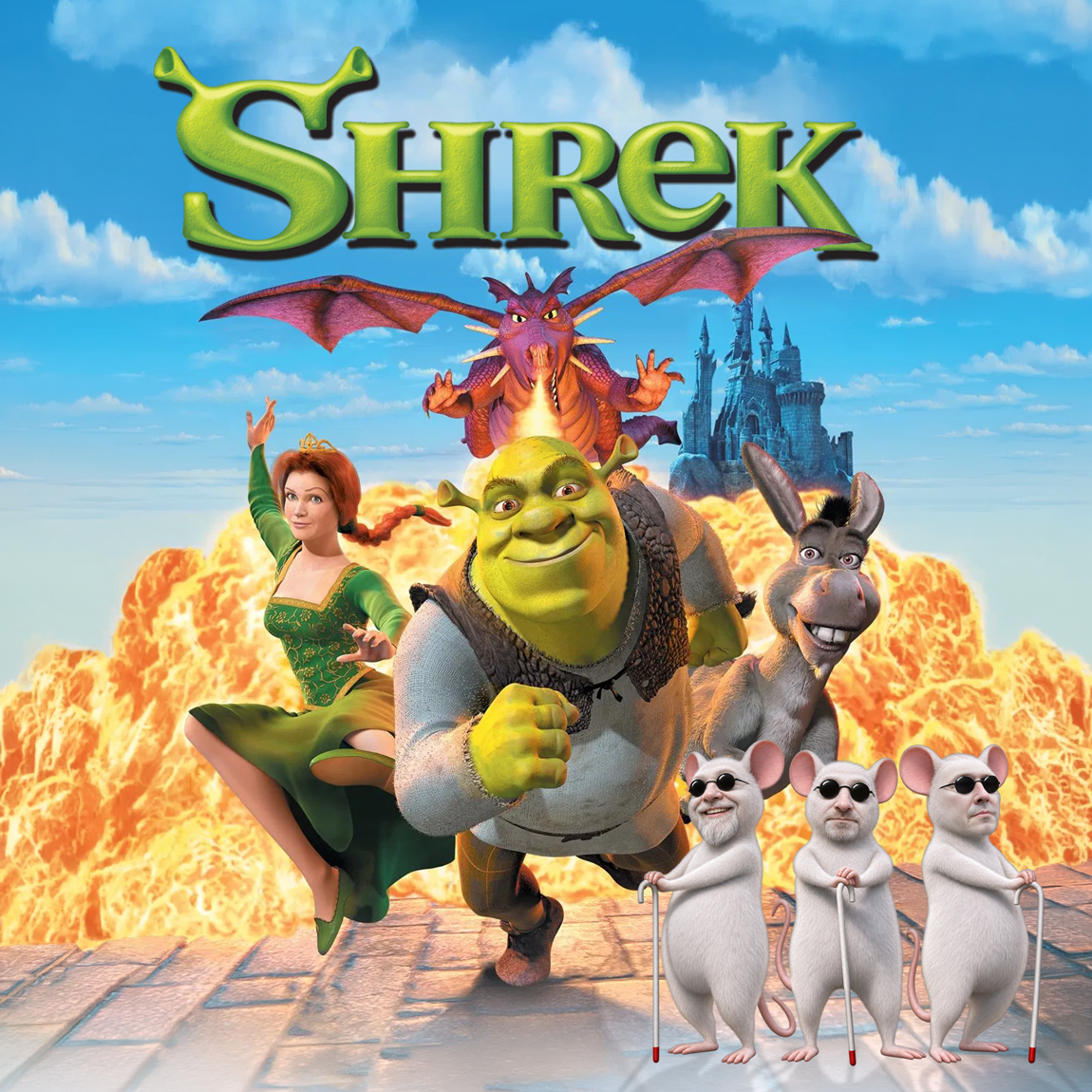
Details
Movie TitleShrek
Release DateApril 22, 2001 (Tribeca Film Festival premiere) · May 18, 2001 (US wide release)
Tagline"The greatest fairy tale never told."
Runtime90 min / 1h 30m
DirectorAndrew Adamson & Vicky Jenson
ScreenplayTed Elliott, Terry Rossio, Joe Stillman & Roger S.H. Schulman
Based OnShrek! — 1990 picture book by William Steig
CinematographerN/A (CGI animated film; Lighting / Rendering supervised by Ken Bielenberg)
Country of OriginUnited States
Sequel / FranchiseFirst entry in the Shrek franchise; followed by Shrek 2 (2004), Shrek the Third (2007), Shrek Forever After (2010), and multiple spin-offs
Budget~$60 million
$267.7 million domestic / $484.4 million worldwide — a massive hit that more than eight-folded its production budget and became the highest-grossing animated film of 2001Box Office
Rotten Tomatoes88% Critics / 90% Audience
Metacritic84 / 100 · 7.8 User
IMDb Rating7.8/10
MPAA RatingPG — for mild language and some crude humor
Content WarningsCrude toilet humor, mild animated violence, brief suggestive jokes, mild language (including one implied s-word), themes of body-image prejudice
Where to WatchPeacock (streaming); available for digital rent/purchase on Amazon Prime Video, Apple TV+, Vudu, YouTube, and Google Play
Main Cast
Mike MyersShrek
Eddie MurphyDonkey
Cameron DiazPrincess Fiona
John LithgowLord Farquaad
Vincent CasselMonsieur Hood
Peter DennisOgre Hunter
Clive PearseOgre Hunter
Jim CummingsCaptain of Guards / Fairy Tale Creatures
Bobby BlockBaby Bear
Chris MillerMagic Mirror / Gingerbread Man (Gingy)
Cody CameronPinocchio / Three Pigs
Conrad VernonGingerbread Man (Gingy) / Señor X
Awards
⭐ Academy Awards (Oscars) — Best Animated Feature — WON — 2002 (first ever awarded in this category)
⭐ BAFTA Awards — Best Adapted Screenplay — NOMINATED — 2002
⭐ Golden Globe Awards — Best Motion Picture, Musical or Comedy — NOMINATED — 2002
⭐ Annie Awards — Outstanding Achievement in an Animated Feature Film — NOMINATED — 2002
⭐ MTV Movie Awards — Best Movie — NOMINATED — 2002
⭐ MTV Movie Awards — Best Comedic Performance (Mike Myers) — NOMINATED — 2002
⭐ Saturn Awards — Best Animated Film — NOMINATED — 2002
⭐ Kids' Choice Awards — Favorite Animated Movie — WON — 2002
Plot Summary
Shrek is a solitary, grumpy ogre who lives peacefully alone in his swamp in the land of Duloc — until Lord Farquaad, the diminutive and tyrannical ruler of the kingdom, banishes all fairy-tale creatures to Shrek's swamp. Desperate to reclaim his home, Shrek strikes a deal with Farquaad: in exchange for the return of his swamp, he will rescue the beautiful Princess Fiona from a dragon-guarded castle so Farquaad can marry her and legitimize his rule. Accompanied by an irrepressibly chatty Donkey, Shrek completes the quest — but along the way he and Fiona begin to fall for each other, complicated by a secret Fiona carries that transforms her at sunset. When Farquaad learns of her secret and banishes her, Shrek must confront his own feelings and his fear of rejection to crash the wedding and profess his love, ultimately revealing that true beauty — and true love — come in forms the world never expects.
↑ Return to Top
Key Quotes
"Ogres are like onions... Onions have layers. Ogres have layers." — Shrek
"That'll do, Donkey. That'll do." — Shrek
"I like that boulder. That is a nice boulder." — Donkey
"Some of you may die, but it's a sacrifice I am willing to make." — Lord Farquaad
"Do you know what that thing can do? It'll give you a fear of spiders, make you think you're everyone else's problem..." — Donkey (on the dragon)
"I'm an ogre! You know — 'Grab your torch and pitchforks!' Doesn't that bother you?" — Shrek
Trivia
Director
- Andrew Adamson and Vicky Jenson were the first co-directors of a DreamWorks Animation feature; Adamson went on to direct both Shrek 2 and the Chronicles of Narnia films.
- Jeffrey Katzenberg had a personal vendetta against Disney when greenlit Shrek, viewing it partly as a satirical shot at Disney fairy-tale conventions — Farquaad was widely reported to be a caricature of Michael Eisner.
- The film was originally planned as a 2D animated movie and went through years of development before switching to full CGI.
- Adamson has said the film's subversive tone was deliberately designed to appeal to adults while still engaging children, setting a template for the DreamWorks Animation style.
- The directors drew inspiration from classic Hollywood fairy-tale films as well as spaghetti-western cinematography for the grand landscape shots of the Far Far Away world.
Cast / Casting
- Chris Farley was originally cast as Shrek and recorded nearly all of his dialogue before his death in December 1997; Mike Myers was subsequently hired and took the role in a completely different direction, eventually re-recording everything with a Scottish accent.
- Mike Myers initially recorded Shrek's lines in his natural Canadian accent; after viewing early footage he felt a Scottish accent better suited the character and requested (at considerable additional cost) to re-dub the entire film.
- Eddie Murphy largely improvised many of Donkey's most memorable lines, with the directors often leaving the cameras running after the official takes to capture his ad-libs.
- John Lithgow based Lord Farquaad's voice partly on a mock-aristocratic English accent and found the character's comic pomposity a refreshing change from his dramatic roles.
- Cameron Diaz recorded her Princess Fiona lines separately from Myers and Murphy; the three leads never recorded in the same studio at the same time.
Soundtrack / Score
- The score was composed by Harry Gregson-Williams and John Powell, who would go on to become two of the most prolific composers in animation.
- The opening sequence set to Smash Mouth's "All Star" became one of the most iconic animated film openings of its generation and helped cement the song's status as a pop-culture staple.
- Rufus Wainwright's cover of Hallelujah was used in an early cut, but the Leonard Cohen original was ultimately chosen for the film's melancholy mid-act montage.
- The end-credits version of "I'm a Believer" features Eddie Murphy himself singing the Smash Mouth track, a callback to Donkey's enthusiasm for the song throughout the film.
- The music supervisors deliberately mixed contemporary pop hits with orchestral score to reinforce the film's anachronistic, self-aware fairy-tale setting.
Location
- The fictional kingdom of Duloc was inspired aesthetically by a sanitized, corporate theme-park setting — widely read as a parody of Disneyland.
- The swamp sequences were designed to feel authentically grimy and naturalistic, with animators studying real bayou and marsh footage to render mud, water, and vegetation convincingly.
- The dragon's castle was modeled loosely on classic medieval fortress architecture with exaggerated gothic spires to heighten the fairy-tale atmosphere.
- The Far Far Away landscape was designed as a sweeping, idealized storybook countryside, with rolling hills and forests that deliberately evoke European fairy-tale illustrations.
Behind-The-Scenes
- Shrek marked the first time DreamWorks Animation used a fully proprietary in-house rendering system called "Zing," which allowed for more realistic skin, cloth, and water simulation than any previous CGI feature.
- Animating human characters like Princess Fiona and Lord Farquaad proved far more technically challenging than the creature characters; the team spent months just developing convincing hair and skin-shading for Fiona.
- The production took approximately four years from greenlight to release, with the CGI pipeline requiring enormous computing resources — the film used roughly 10 terabytes of data.
- The scene in which Shrek and Donkey walk through a field of sunflowers was cited by the VFX team as one of the most computationally expensive sequences, requiring individual simulation of thousands of flower stems.
- Jeffrey Katzenberg was so heavily involved in the creative process that he held weekly screenings and reportedly pushed constantly for more irreverent humor and faster pacing.
Nostalgia
- Shrek was the first film to win the Academy Award for Best Animated Feature, a category created in part because of the unprecedented quality of CGI animation being produced in the early 2000s.
- The film is widely credited with launching the era of "adult-friendly" animated comedy, paving the way for a generation of animated films aimed at broad, all-ages audiences with layered humor.
- For many Millennials, Shrek was a defining theatrical experience of childhood and early adolescence, and the franchise has since become one of the most enduring internet-meme phenomena of the 21st century.
- The "All Star" opening sequence became so embedded in pop culture that it has been remixed and referenced in thousands of internet memes, turning the film into a genuine cult phenomenon decades after its release.
- Shrek is frequently cited alongside Toy Story and The Lion King as one of the films that proved animation was a legitimate prestige cinema format, not just a medium for children.
Easter Eggs
- Lord Farquaad's name is widely regarded as a barely-disguised crude pun; the filmmakers have never officially confirmed this but have consistently declined to deny it with a straight face.
- The tournament scene in Duloc contains a subtle visual gag where the arena decorations and color scheme mirror the aesthetic of a certain famous theme-park castle.
- In the Magic Mirror's introductory sequence, the mirror briefly references fairy-tale characters in a manner that parodies classic Disney animated films, including a nod to Snow White's magic mirror.
- Pinocchio's nose grows in a suggestive direction during one scene as a quick adult joke that sailed over the heads of younger viewers.
- The end-credits gag reel was constructed to resemble the behind-the-scenes bloopers reels that Disney popularized with their own animated films — itself a meta-parody of Disney marketing.
Misc.
- Shrek was the best-selling DVD of 2001, moving over 10 million units in its first month of home-video release in the United States.
- The film spawned one of the most commercially successful animated franchises in history, with the four main films collectively grossing over $3.5 billion worldwide.
- William Steig, the author of the source picture book, reportedly enjoyed the film greatly and was delighted that the story reached such a massive global audience.
- DreamWorks Animation went public in 2004 partly on the financial strength of the Shrek franchise, which was considered the company's crown jewel intellectual property.
- A Broadway musical adaptation of Shrek opened in 2008 and ran for 441 performances, earning eight Tony Award nominations including Best Musical.
Soundtrack
Shrek (Music from the Motion Picture) Harry Gregson-Williams & John Powell · 28 tracks · 1:13:45
1
Best Years of Our Lives
Smash Mouth
3:21
2
I'm a Believer
Smash Mouth
3:04
3
I'm on My Way
The Proclaimers
3:40
4
My Beloved Monster
Eels
2:18
5
Hallelujah
Rufus Wainwright
3:32
6
True Love's First Kiss
Harry Gregson-Williams & John Powell
2:19
7
Fairytale
Harry Gregson-Williams & John Powell
3:41
8
Welcome to Duloc
Harry Gregson-Williams & John Powell
1:51
9
Shrek's Quest
Harry Gregson-Williams & John Powell
3:28
10
Fiona's Secret
Harry Gregson-Williams & John Powell
3:44
11
The Dragon's Lair
Harry Gregson-Williams & John Powell
4:12
12
Escape from the Dragon's Lair
Harry Gregson-Williams & John Powell
3:16
13
Fiona's Lullaby
Harry Gregson-Williams & John Powell
1:58
14
Morning at the Camp
Harry Gregson-Williams & John Powell
2:34
15
Shrek and Fiona
Harry Gregson-Williams & John Powell
3:02
16
I Feel Good (I Got You)
James Brown
2:45
17
Bad Reputation
Joan Jett & The Blackhearts
2:48
18
On the Road Again
Eddie Murphy
1:04
19
It Is You (I Have Loved)
Dana Glover
3:50
20
Stay Home
Self
3:04
21
Fairytale (Reprise)
Harry Gregson-Williams & John Powell
2:08
22
The Royal Wedding
Harry Gregson-Williams & John Powell
4:33
23
Shrek's World
Harry Gregson-Williams & John Powell
3:22
—
Additional tracks — full tracklist unverified
If You Liked This, Watch Next
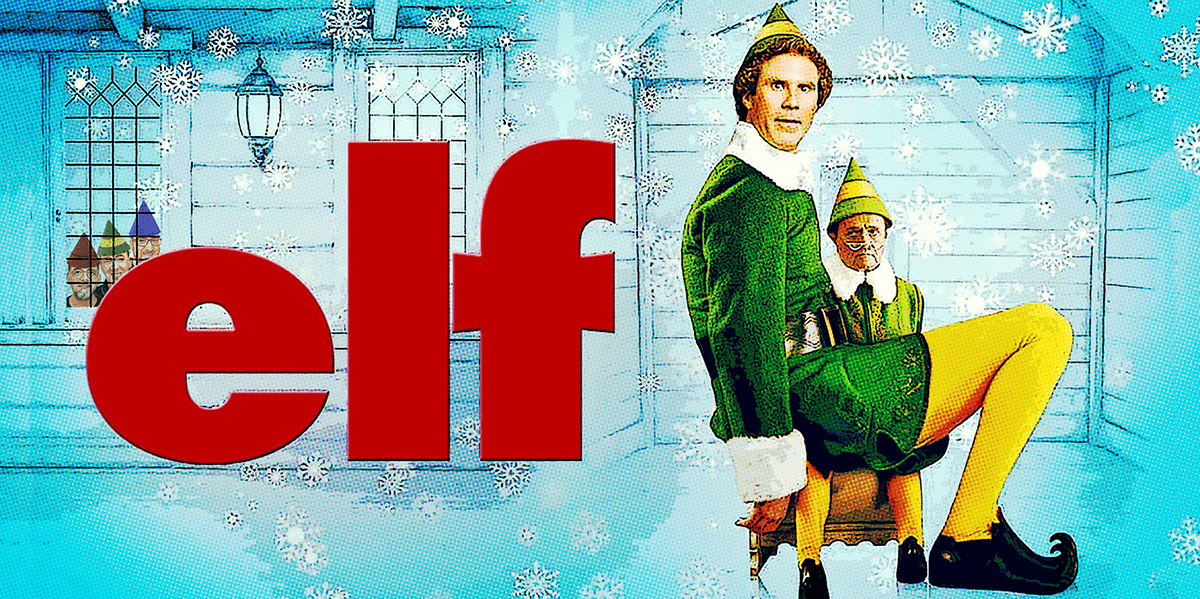
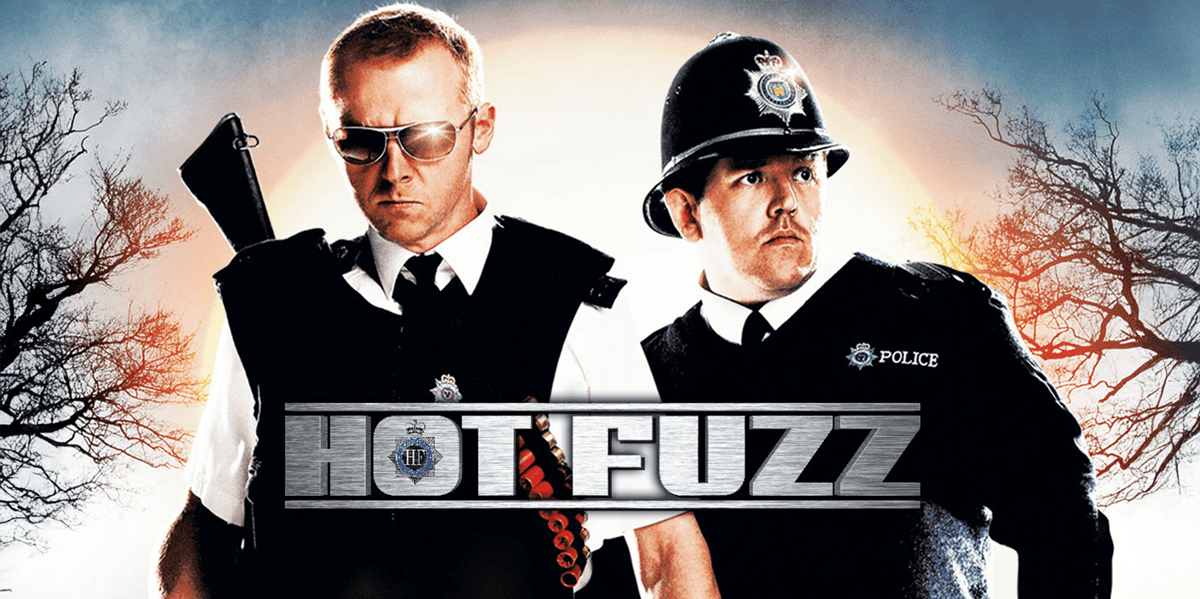
Other movies reviewed by 3 Guys and a Flick that fans of Shrek tend to love — all rated above 3.5.
↑ Return to Top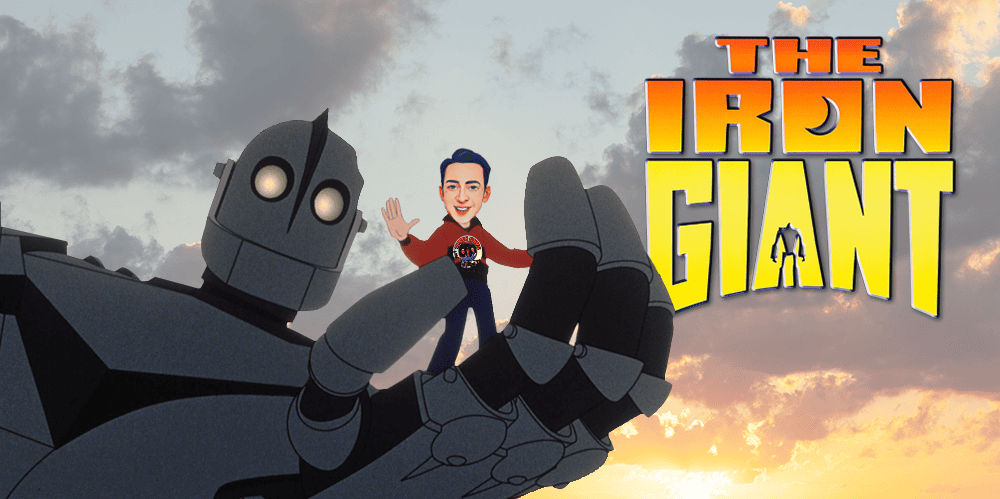

Sources Cited
3 Guys and a Flick - Latest Episode
3 Guys and a Flick - Ratings
IMDb - Shrek
IMDb - Full Cast & Crew
IMDb - Awards
IMDb - Quotes
IMDb - Taglines
IMDb - Soundtrack
IMDb - Filming Locations
IMDb - Trivia
Box Office Mojo - Shrek
The Numbers - Shrek
Rotten Tomatoes - Shrek
Metacritic - Shrek
Wikipedia - Shrek
Show notes generated November 25, 2026. Content reflects information available at time of generation.
↑ Return to Top