
Details
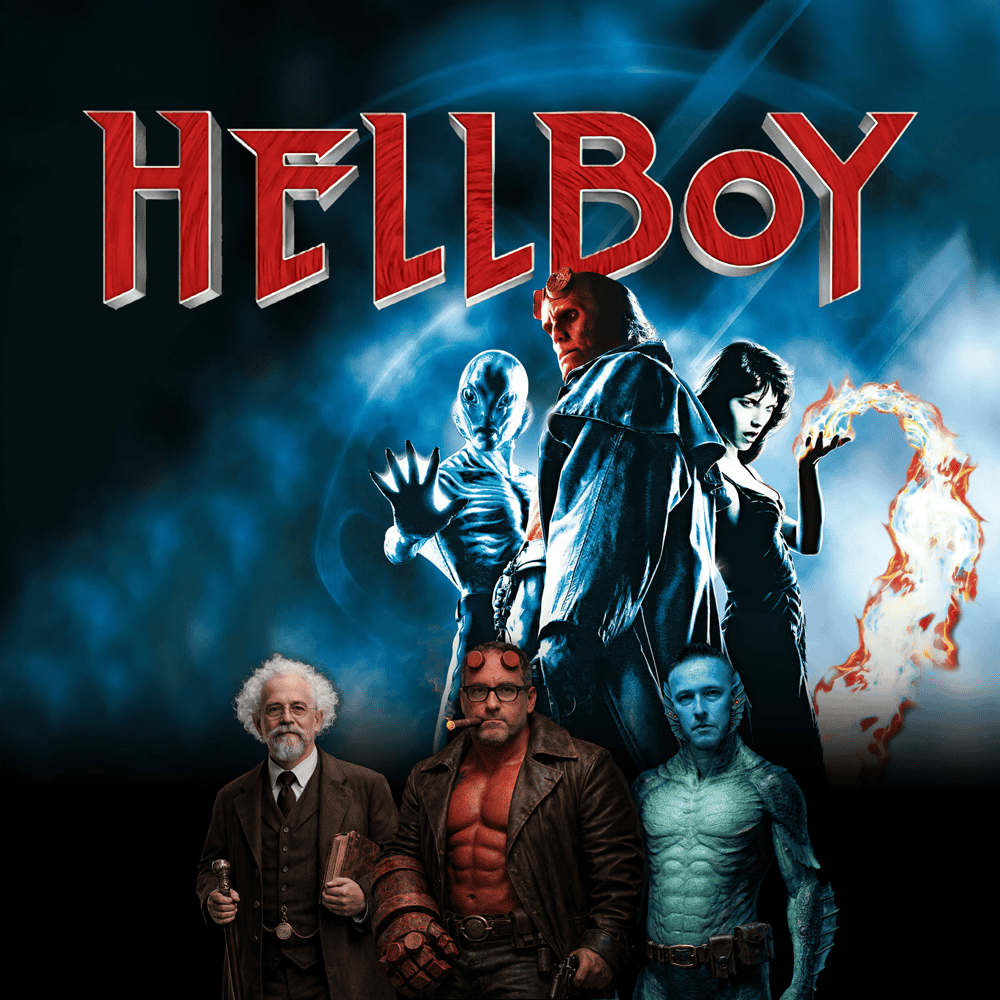
Movie TitleHellboy
Release DateApril 2, 2004
TaglineGive Evil Hell
Runtime122 minutes
DirectorGuillermo del Toro
Screenplay Written ByGuillermo del Toro
Based OnThe Dark Horse Comics character and comic series Hellboy, created by Mike Mignola; screen story by Guillermo del Toro & Peter Briggs
Is It a Remake?No. It is the first live-action Hellboy feature film, followed by Hellboy II: The Golden Army in 2008 and later separate reboots.
BudgetApproximately $60–66 million
Box OfficeApprox. $59.6 million domestic / Approx. $99.4–99.8 million worldwide
Main Cast
Ron PerlmanHellboy
Selma BlairLiz Sherman
Jeffrey TamborTom Manning
Karel RodenGrigori Rasputin
Rupert EvansJohn Myers
John HurtProfessor Trevor Bruttenholm
Doug JonesAbe Sapien
David Hyde PierceAbe Sapien Voice
Ladislav BeranKarl Ruprecht Kroenen
Biddy HodsonIlsa Haupstein
Brian SteeleSammael
Kevin TrainorYoung Broom
Awards
⭐ Saturn Award Winner — Best Make-Up: Jake Garber, Matt Rose & Mike Elizalde
⭐ Saturn Award Nominee — Best Fantasy Film
⭐ Saturn Award Nominee — Best Costumes
⭐ Visual Effects Society Awards Nominee — Outstanding Character Animation in a Live Action Motion Picture
⭐ International Horror Guild Award Nominee — Best Movie
⭐ IMDb lists the film with 3 wins and 23 nominations total.
⭐ No Academy Award, Golden Globe, or BAFTA nominations were verified for the film.
Short Plot Summary
During World War II, Nazi occultists open a portal that brings a demon child into the human world. Raised by Professor Trevor Bruttenholm, Hellboy grows up working for the Bureau for Paranormal Research and Defense, battling supernatural threats while hidden from the public. When Rasputin returns with plans to unleash apocalyptic forces, Hellboy must confront his origin, his destiny, and the choice to protect humanity instead of destroy it.
↑ Return to Top
Key Quotes
“I’m fireproof. You’re not.” — Hellboy
“There are things that go bump in the night. We are the ones who bump back.” — Professor Bruttenholm
“What makes a man a man?” — Professor Bruttenholm
“In the absence of light, darkness prevails.” — Professor Bruttenholm
“Red means stop!” — Hellboy
Trivia
Director
- Hellboy was written and directed by Guillermo del Toro, with screen story credited to del Toro and Peter Briggs.
- Del Toro had long been a fan of Mike Mignola’s comics and pushed for Ron Perlman to play Hellboy.
- The film combines several del Toro signatures: sympathetic monsters, occult history, Catholic imagery, hidden worlds, clockwork design, and practical creature work.
- The movie was produced by Revolution Studios, Dark Horse Entertainment, and Lawrence Gordon/Lloyd Levin Productions.
Cast / Casting
- Ron Perlman plays Hellboy, a demon raised by humans who works as a paranormal investigator.
- John Hurt plays Professor Trevor Bruttenholm, Hellboy’s adoptive father and the head of the B.P.R.D.
- Selma Blair plays Liz Sherman, a pyrokinetic former B.P.R.D. agent whose powers and emotional control are central to the story.
- Doug Jones physically performed Abe Sapien, while David Hyde Pierce provided Abe’s voice in the original release.
- Karel Roden plays Grigori Rasputin, the occult villain who brings Hellboy into the world and tries to use him as a key to the apocalypse.
Soundtrack / Score
- The score was composed by Marco Beltrami.
- The original motion picture soundtrack was released by Varèse Sarabande on April 6, 2004.
- Beltrami’s score mixes gothic orchestration, action scoring, supernatural menace, and character themes.
- Tom Waits’ “Heartattack and Vine” appears in the film’s soundtrack listings and fits Hellboy’s gritty, blue-collar monster-detective attitude.
Location
- The story moves between World War II Scotland, the B.P.R.D. headquarters, New York City, subway tunnels, museums, cemeteries, and occult ruins.
- The movie was filmed largely in the Czech Republic, especially around Prague.
- Listed production locations include Barrandov Studios in Prague and multiple Prague-area locations.
- Prague’s gothic architecture helped the film create its mix of comic-book action, occult horror, and hidden supernatural history.
Behind-The-Scenes
- The film is based on Mike Mignola’s Dark Horse Comics character and comic series.
- The B.P.R.D. — Bureau for Paranormal Research and Defense — comes directly from the comics and became a major part of the wider Hellboy mythology.
- Ron Perlman’s makeup transformation was central to the film’s identity, and the makeup team won the Saturn Award for Best Make-Up.
- Box Office Mojo lists the film’s opening weekend at $23,172,440 and its domestic total at $59,623,958.
- The film’s reported budget varies by source, with The Numbers listing $60 million and Box Office Mojo listing $66 million.
Nostalgia
- Hellboy arrived during the early-2000s superhero boom but stood apart from cleaner, more traditional comic-book movies of the era.
- The film’s monster romance, occult pulp adventure, and blue-collar hero attitude helped make it a cult favorite.
- Ron Perlman’s cigar-chomping, cat-loving, emotionally bruised Hellboy remains one of the most beloved comic-book casting choices of the 2000s.
- The movie was followed by del Toro’s Hellboy II: The Golden Army in 2008.
Easter Eggs
- Hellboy’s true name, Anung Un Rama, comes from the comics and is tied to his apocalyptic destiny.
- Hellboy’s stone Right Hand of Doom and oversized revolver, the Samaritan, are central visual icons from Mike Mignola’s comic mythology.
- The occult-Nazi prologue connects to a long pulp-comics tradition of secret World War II experiments unleashing modern supernatural consequences.
- Some theaters and retailers reportedly objected to the word “hell” in the title; some locations marketed the movie as “Helloboy” or avoided related products.
Misc.
- Hellboy is rated PG-13 and runs 122 minutes.
- Rotten Tomatoes’ critics consensus praised the film’s wit, humor, and Guillermo del Toro’s fantastic visuals.
- The film’s sequel, Hellboy II: The Golden Army, continued the del Toro / Perlman version of the character in 2008.
- Your 3 Guys and a Flick ratings page lists the episode as Episode 247, with Don rating it 3.00, Ken rating it 3.75, Jon rating it 3.75, and an overall rating of 3.50.
Sources Cited
3 Guys and a Flick — Podcast 247: Hellboy (2004)
3 Guys and a Flick — Ratings
IMDb — Hellboy
IMDb — Hellboy Full Cast & Crew
IMDb — Hellboy Awards
IMDb — Hellboy Quotes
IMDb — Hellboy Taglines
IMDb — Hellboy Soundtrack
IMDb — Hellboy Filming Locations
AFI Catalog — Hellboy
Box Office Mojo — Hellboy
The Numbers — Hellboy
Rotten Tomatoes — Hellboy
Movie-Locations.com — Hellboy Filming Locations
SoundtrackINFO — Hellboy Soundtrack
Wikipedia — Hellboy
↑ Return to Top