Details
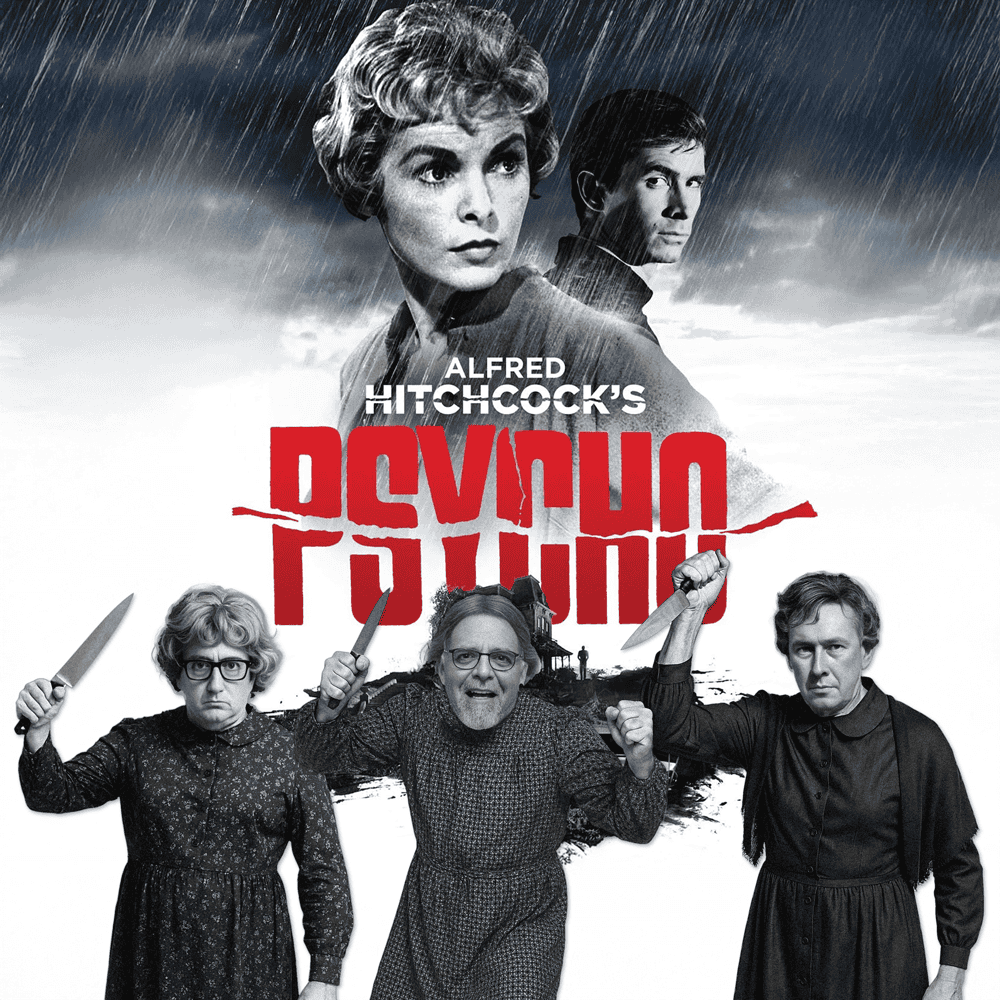
Movie TitlePsycho
Release DateJune 16, 1960 premiere / August 1960 general U.S. release
TaglineA new — and altogether different — screen excitement!
Runtime108–109 minutes
DirectorAlfred Hitchcock
Screenplay Written ByJoseph Stefano
Based OnRobert Bloch’s 1959 novel Psycho
Is It a Remake?No. The 1960 film is the original Hitchcock adaptation. It was later remade by Gus Van Sant in 1998.
BudgetApproximately $806,947
Box OfficeApprox. $32.2–32.4 million domestic; historical worldwide totals vary by source
Main Cast
Anthony PerkinsNorman Bates
Janet LeighMarion Crane
Vera MilesLila Crane
John GavinSam Loomis
Martin BalsamMilton Arbogast
John McIntireDeputy Sheriff Al Chambers
Simon OaklandDr. Fred Richman
Frank AlbertsonTom Cassidy
Patricia HitchcockCaroline
Vaughn TaylorGeorge Lowery
Lurene TuttleMrs. Chambers
Mort MillsHighway Patrol Officer
Awards
⭐ Academy Award Nominee — Best Director: Alfred Hitchcock
⭐ Academy Award Nominee — Best Supporting Actress: Janet Leigh
⭐ Academy Award Nominee — Best Cinematography, Black-and-White: John L. Russell
⭐ Academy Award Nominee — Best Art Direction-Set Decoration, Black-and-White
⭐ Golden Globe Winner — Best Supporting Actress: Janet Leigh
⭐ Directors Guild of America Nominee — Outstanding Directorial Achievement in Motion Pictures: Alfred Hitchcock
⭐ National Film Registry — Selected for preservation by the Library of Congress in 1992
⭐ AFI Recognition — Ranked #1 on AFI’s 100 Years…100 Thrills list; Norman Bates ranked #2 on AFI’s villains list
Short Plot Summary
Marion Crane steals $40,000 from her employer and flees Phoenix, hoping the money will help her start a new life with her boyfriend, Sam Loomis. Exhausted and anxious, she stops for the night at the isolated Bates Motel, where she meets shy proprietor Norman Bates and hears about his domineering mother in the old house on the hill. After Marion disappears, her sister Lila, Sam, and private detective Arbogast begin searching for answers — uncovering one of cinema’s most famous and disturbing secrets.
↑ Return to Top
Key Quotes
“A boy’s best friend is his mother.” — Norman Bates
“We all go a little mad sometimes.” — Norman Bates
“She just goes a little mad sometimes.” — Norman Bates
“A son is a poor substitute for a lover.” — Norman Bates
“I’m not even going to swat that fly.” — Norman Bates / Mother
“A new — and altogether different — screen excitement!” — Tagline
Trivia
Director
- Psycho was produced and directed by Alfred Hitchcock.
- The film was a sharp departure from Hitchcock’s bigger, glossier late-1950s productions, especially after North by Northwest.
- Hitchcock financed the film himself after Paramount reportedly hesitated over the material.
- The film was shot in black and white partly to control cost and tone, and it used members of Hitchcock’s television crew.
- Hitchcock earned his final Academy Award nomination for Best Director for Psycho.
Cast / Casting
- Anthony Perkins plays Norman Bates, one of horror cinema’s most iconic characters.
- Janet Leigh plays Marion Crane, whose shocking early exit helped rewrite audience expectations for movie storytelling.
- Vera Miles plays Lila Crane, Marion’s sister and one of the film’s key investigators.
- John Gavin plays Sam Loomis, Marion’s boyfriend.
- Martin Balsam plays private investigator Milton Arbogast.
- Patricia Hitchcock, Alfred Hitchcock’s daughter, appears as Marion’s co-worker Caroline.
Soundtrack / Score
- The score was composed by Bernard Herrmann.
- Herrmann’s all-string score became one of the most famous horror scores ever written.
- The shrieking strings in the shower scene are among the most recognizable pieces of film music in cinema history.
- AFI ranked the score #4 on its 100 Years of Film Scores list.
- Hitchcock originally considered not using music in the shower sequence, but Herrmann’s cue became inseparable from the scene’s impact.
Location
- The story begins in Phoenix, Arizona, before moving to the isolated Bates Motel near the fictional Fairvale, California.
- Production was primarily shot at Revue Studios / Universal-area facilities in California.
- The Bates Motel and the Bates house became two of the most famous standing sets in horror history.
- Additional driving material was shot along California highways to support Marion’s escape sequence.
- The contrast between the anonymous city, empty highway, rainstorm, motel office, and looming house gives the film much of its haunted-roadside atmosphere.
Behind-The-Scenes
- The film was based on Robert Bloch’s 1959 novel, which was partly inspired by real-life murderer Ed Gein.
- Joseph Stefano wrote the screenplay.
- The shower scene required dozens of camera setups and became one of the most analyzed sequences in film history.
- Chocolate syrup was reportedly used as blood in the black-and-white shower sequence.
- Hitchcock’s marketing campaign famously asked theaters not to admit late arrivals, preserving the film’s surprises.
- The movie was made for roughly $806,947 and became a massive box-office success.
Nostalgia
- Psycho is widely considered one of the most influential horror and suspense films ever made.
- The film helped push horror toward more psychological, intimate, and contemporary fears.
- Norman Bates, the Bates Motel, the shower scene, and Bernard Herrmann’s score have become permanent pieces of pop culture.
- The movie’s mid-story shock changed how audiences thought about protagonists, plot structure, and moviegoing secrecy.
- The film’s legacy includes sequels, a 1998 remake, documentaries, the series Bates Motel, and countless parodies and references.
Easter Eggs
- Hitchcock’s cameo appears early in the film outside Marion’s office.
- Norman’s taxidermy birds visually foreshadow predatory behavior and echo Marion Crane’s bird-like last name.
- The name “Sam Loomis” later inspired the name of Donald Pleasence’s character in John Carpenter’s Halloween.
- The Bates house silhouette was influenced by Gothic haunted-house imagery and became instantly recognizable.
- The final shot of Norman subtly overlays him with the car being pulled from the swamp, tying the hidden crime back to the hidden identity.
Misc.
- Psycho runs approximately 108–109 minutes, depending on source and release version.
- It was released before the modern MPAA rating system, so it is commonly listed as not rated.
- AFI lists the film as horror, and Box Office Mojo classifies it under horror, mystery, and thriller.
- Rotten Tomatoes’ critics consensus credits the film with helping validate modern horror through Hitchcock’s tact, style, and craft.
- Your 3 Guys and a Flick ratings page lists the episode as Episode 232, with Don rating it 3.75, Ken rating it 4.00, Jon rating it 3.75, and an overall rating of 3.83.
Sources Cited
3 Guys and a Flick — Podcast 232: Psycho
3 Guys and a Flick — Ratings
IMDb — Psycho
IMDb — Psycho Full Cast & Crew
IMDb — Psycho Awards
IMDb — Psycho Quotes
IMDb — Psycho Taglines
IMDb — Psycho Soundtrack
IMDb — Psycho Filming Locations
AFI Catalog — Psycho
AFI — Robert Osborne on Psycho
Box Office Mojo — Psycho
The Numbers — Psycho
Rotten Tomatoes — Psycho
Los Angeles Times — Horror by the Numbers
Wikipedia — Psycho Film
↑ Return to Top