Details
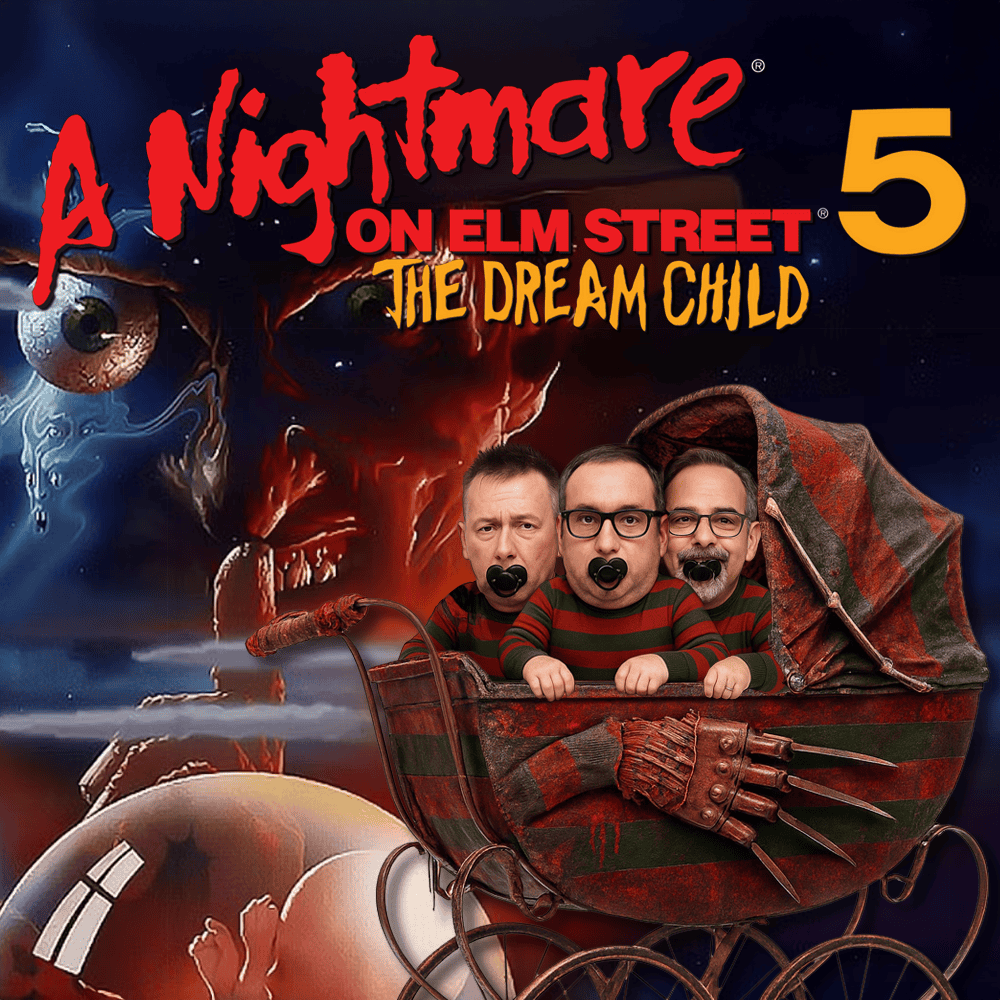
Movie TitleA Nightmare on Elm Street 5: The Dream Child
Release DateAugust 11, 1989
TaglineFreddy delivers.
Runtime89–90 minutes, depending on source
DirectorStephen Hopkins
Screenplay Written ByLeslie Bohem
Story ByJohn Skipp, Craig Spector & Leslie Bohem; based on characters created by Wes Craven
Is It a Remake?No. It is the fifth film in the original A Nightmare on Elm Street series and a direct sequel to The Dream Master.
BudgetApproximately $6 million by The Numbers; AFI notes an $8 million figure cited by producer Robert Shaye
Box OfficeApprox. $22.17 million domestic / worldwide
Main Cast
Robert EnglundFreddy Krueger
Lisa WilcoxAlice Johnson / Alice Walker
Kelly Jo MinterYvonne Miller
Danny HasselDan Jordan
Erika AndersonGreta Gibson
Joe SeelyMark Gray
Nick MeleAlice’s Dad / Dennis Johnson
Valorie ArmstrongMrs. Jordan
Burr DeBenningMr. Jordan
Clarence FelderMr. Gray
Beatrice BoeppleAmanda Krueger
Whitby HertfordJacob
Awards
⭐ Fantasporto Winner — Critics’ Award: Stephen Hopkins
⭐ Fantasporto Nominee — International Fantasy Film Award, Best Film: Stephen Hopkins
⭐ Golden Raspberry Awards Winner — Worst Original Song: “Bring Your Daughter... to the Slaughter” by Bruce Dickinson
⭐ Golden Raspberry Awards Nominee — Worst Original Song: “Let’s Go” by Kool Moe Dee
⭐ Young Artist Awards Winner — Best Young Actor in a Supporting Role: Whitby Hertford
⭐ No Academy Award, Golden Globe, BAFTA, or Saturn Award nominations were verified for the film.
Short Plot Summary
After surviving Freddy Krueger in The Dream Master, Alice Johnson is trying to build a normal life with Dan and her friends. But Freddy finds a new loophole: he begins using the dreams of Alice’s unborn child, Jacob, to reach his victims while Alice is awake. As her friends are pulled into grotesque nightmares involving food, motorcycles, comic books, and Freddy’s twisted family history, Alice must uncover the truth about Amanda Krueger, protect her child, and stop Freddy from being reborn through the dream world.
↑ Return to Top
Key Quotes
“It’s a boy.” — Freddy Krueger
“Bon appétit, bitch.” — Freddy Krueger
“You are what you eat.” — Freddy Krueger
“Better not dream and drive.” — Freddy Krueger
“Faster than a bastard maniac, more powerful than a loco-madman, it’s Super Freddy!” — Freddy Krueger
“Freddy delivers.” — Tagline
Trivia
Director
- A Nightmare on Elm Street 5: The Dream Child was directed by Stephen Hopkins.
- Hopkins gave the film a darker, more gothic style than the brighter, music-video energy of The Dream Master.
- The film leans into pregnancy horror, Catholic imagery, asylum nightmares, body horror, and Freddy’s mythology.
- Hopkins later directed films including Predator 2, Judgment Night, Blown Away, and Lost in Space.
- The onscreen title listed by AFI is A Nightmare on Elm Street: The Dream Child, though the movie is commonly known as A Nightmare on Elm Street 5: The Dream Child.
Cast / Casting
- Robert Englund returned as Freddy Krueger, continuing his run as the franchise’s dream-stalking mascot and one-liner machine.
- Lisa Wilcox returned as Alice, making her one of the few Nightmare final girls to lead two consecutive films.
- Danny Hassel returned as Dan Jordan after appearing in A Nightmare on Elm Street 4: The Dream Master.
- Beatrice Boepple plays Amanda Krueger, expanding the mythology around Freddy’s mother.
- Whitby Hertford plays Jacob, Alice’s unborn son as he appears in the dream world.
- Kelly Jo Minter plays Yvonne, one of Alice’s friends and one of the more grounded characters in a movie filled with mutant motorcycles, killer food, and comic-book chaos.
Soundtrack / Score
- The score was composed by Jay Ferguson.
- The soundtrack leaned hard into late-1980s rock, metal, and hip-hop energy.
- Featured soundtrack artists included Bruce Dickinson, Kool Moe Dee, W.A.S.P., Whodini, Schoolly D, and Mammoth.
- Bruce Dickinson’s “Bring Your Daughter... to the Slaughter” won the Razzie for Worst Original Song.
- The music is a perfect late-’80s horror-marketing time capsule: Freddy was no longer just a nightmare killer, he was basically an MTV-ready franchise brand with knives.
Location
- The film is set in Springwood, Ohio, the fictional home of the Elm Street series.
- Filming took place around the Los Angeles area.
- Springwood High scenes returned to Venice High School, a location associated with the franchise.
- UCLA’s Janss Steps have been identified by location trackers as the asylum steps seen in the film.
- Additional sets were built in Culver City warehouse space for the film’s nightmare and interior sequences.
Behind-The-Scenes
- AFI notes that this was the fifth installment in the Nightmare on Elm Street film series.
- Special effects artist David Miller, who designed Freddy’s original makeup for Wes Craven’s 1984 film, returned for this sequel.
- Miller told The Hollywood Reporter that he wanted Freddy’s look to be a compromise between the scarier original makeup and the more familiar sequel-era Freddy.
- Freddy’s makeup reportedly took about four hours to apply and roughly two hours to remove.
- The film initially received an X rating from the MPAA until graphic material was cut from the theatrical version, especially around Greta’s death and Dan’s motorcycle transformation.
- The “Freddy Baby” was created as a remote-controlled puppet by David Miller’s team.
Nostalgia
- This is peak late-1980s Freddy: less shadowy boogeyman, more wisecracking nightmare celebrity.
- The movie arrived when Freddy was everywhere — movies, merchandise, music tie-ins, posters, and the syndicated TV series Freddy’s Nightmares.
- The comic-book nightmare sequence with “Super Freddy” is extremely late-’80s in the best/worst possible way.
- The film captures the era when horror sequels were expected to be bigger, weirder, louder, and packed with more elaborate death scenes than the last entry.
- It also marks a turning point where the franchise’s mythology started to get very tangled — because apparently even Freddy needed a family-tree subplot.
Easter Eggs
- The film continues the Amanda Krueger mythology introduced in A Nightmare on Elm Street 3: Dream Warriors.
- The asylum imagery connects back to Freddy’s origin as the “bastard son of a hundred maniacs.”
- Alice’s dream powers carry over from The Dream Master, where she absorbed the abilities of her friends.
- The comic-book nightmare turns Mark’s fandom into a surreal battle with “Super Freddy.”
- The title’s “Dream Child” refers to Jacob, Alice’s unborn son, whose dreams become Freddy’s new doorway into reality.
Misc.
- A Nightmare on Elm Street 5: The Dream Child is rated R.
- Box Office Mojo classifies the movie as fantasy and horror.
- The Numbers lists the film’s production budget at approximately $6 million.
- Box Office Mojo lists the domestic opening weekend at $8,115,176 and the final domestic/worldwide gross at $22,168,359.
- Your 3 Guys and a Flick ratings page lists the episode as Episode 227, with Don rating it 0.75, Ken rating it 2.50, and an overall rating of 1.63. No Jon rating is visible in the row.
Sources Cited
3 Guys and a Flick — Podcast 227: A Nightmare on Elm Street 5: Dream Child
3 Guys and a Flick — Ratings
IMDb — A Nightmare on Elm Street 5: The Dream Child
IMDb — Full Cast & Crew
IMDb — Awards
IMDb — Quotes
IMDb — Taglines
IMDb — Soundtrack
IMDb — Filming Locations
AFI Catalog — A Nightmare on Elm Street: The Dream Child
Box Office Mojo — The Dream Child
The Numbers — The Dream Child
Rotten Tomatoes — The Dream Child
Metacritic — The Dream Child
Set-Jetter — The Dream Child Locations
Then & Now Movie Locations — The Dream Child
Wikipedia — The Dream Child
↑ Return to Top