Details
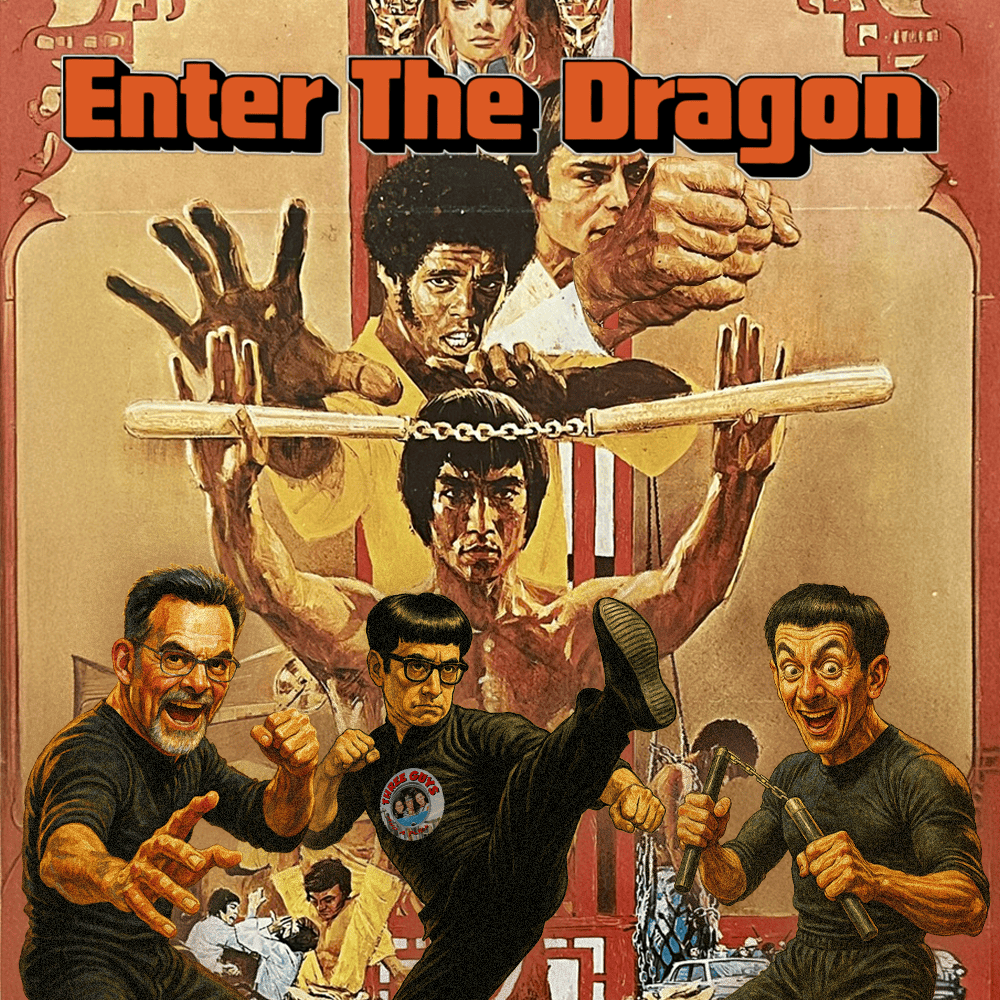
Movie TitleEnter the Dragon
Release DateHong Kong: July 26, 1973 / New York: August 17, 1973 / Los Angeles: August 24, 1973
TaglineTheir deadly mission: to crack the forbidden island of Han!
Runtime98–99 minutes by AFI; some modern listings note 102 minutes
DirectorRobert Clouse
Screenplay Written ByMichael Allin
Based OnOriginal screenplay; fighting sequences staged by Bruce Lee
Is It a Remake?No. Enter the Dragon is an original martial arts action film and an American-Hong Kong co-production.
BudgetApproximately $850,000
Box OfficeOften reported at more than $90 million worldwide during its original era, with later re-release totals and historical figures varying by source
Main Cast
Bruce LeeLee
John SaxonRoper
Jim KellyWilliams
Ahna CapriTania
Shih KienHan
Robert WallOharra
Angela MaoSu Lin
Betty ChungMei Ling
Geoffrey WeeksBraithwaite
Bolo YeungBolo
Peter ArcherParsons
Jackie ChanHan’s Guard / Extra
Awards
⭐ National Film Registry — Selected for preservation in 2004 by the Library of Congress.
⭐ National Film Preservation Board — IMDb lists the film with 1 win tied to its National Film Registry preservation recognition.
⭐ AFI recognition — Enter the Dragon appears in AFI Movie Club coverage as an iconic and groundbreaking martial arts film.
⭐ Cultural legacy — Widely regarded as one of the most influential martial arts films ever released.
⭐ No Academy Award, Golden Globe, BAFTA, or Saturn Award nominations were verified for the film.
Short Plot Summary
Shaolin martial artist Lee is recruited by British intelligence to infiltrate the private island of Han, a former Shaolin monk suspected of running an opium and human-trafficking operation behind the cover of an international martial arts tournament. Lee has a personal reason to accept: Han’s bodyguard Oharra was responsible for the death of Lee’s sister. Joined by American fighters Roper and Williams, Lee enters Han’s tournament, uncovers the island’s criminal operation, and faces Han in a legendary showdown that turns a spy mission into one of cinema’s most influential martial arts battles.
↑ Return to Top
Key Quotes
“Don’t think. Feel.” — Lee
“It is like a finger pointing away to the moon.” — Lee
“Boards don’t hit back.” — Lee
“Man, you come right out of a comic book.” — Williams
“We are unique, gentlemen, in that we create ourselves.” — Han
“The art of fighting without fighting.” — Lee
Trivia
Director
- Enter the Dragon was directed by Robert Clouse.
- The screenplay was written by Michael Allin.
- AFI credits Bruce Lee with staging the fighting sequences.
- The film blends martial arts, spy adventure, tournament structure, revenge drama, and exploitation-era crime thriller elements.
- Robert Clouse later directed additional material for Game of Death, incorporating Bruce Lee footage after Lee’s death.
Cast / Casting
- Bruce Lee stars as Lee in what became his final completed feature film.
- John Saxon plays Roper, the gambling American fighter pulled into Han’s tournament.
- Jim Kelly plays Williams, bringing martial arts skill and blaxploitation-era cool to the ensemble.
- Shih Kien plays Han, the claw-handed crime lord whose island hides a much darker operation.
- Angela Mao plays Su Lin, Lee’s sister, in the flashback that gives Lee his personal revenge motive.
- Jackie Chan appears briefly as one of Han’s guards, years before becoming an international star.
Soundtrack / Score
- The score was composed by Lalo Schifrin.
- Schifrin’s music combines funk, jazz, orchestral spy-thriller energy, and martial-arts tension.
- The score helps connect the film’s James Bond-style espionage framework with Hong Kong action energy.
- The main theme became one of the most recognizable martial arts movie themes of the 1970s.
- The music gives Han’s island a stylish, dangerous, almost comic-book villain atmosphere.
Location
- The film was shot in Hong Kong from January through late April 1973.
- Han’s island fortress was created using Hong Kong locations, studio work, and elaborate production design.
- The island-tournament setup gave the movie an international spy-film feel while still centering martial arts action.
- AFI notes that Warner Bros. emphasized the film’s Hong Kong production values while marketing it as a major Warner Bros. feature.
- The climactic hall-of-mirrors sequence became one of the film’s most famous visual set pieces.
Behind-The-Scenes
- AFI notes that Enter the Dragon was Bruce Lee’s last completed feature-length film.
- Bruce Lee died on July 20, 1973, shortly before the film’s wide release.
- The film was produced by Sequoia Pictures, Concord Productions, and Warner Bros., with Raymond Chow associated with the production.
- Warner Bros. heavily marketed the film in the United States to distinguish it from dubbed imported kung fu films of the era.
- AFI notes that the film’s production ran from January 22 through late April 1973 in Hong Kong.
- The mirror-room finale has often been compared to Orson Welles’ mirror funhouse sequence in The Lady from Shanghai.
Nostalgia
- Enter the Dragon helped turn Bruce Lee into a permanent global pop-culture icon.
- The film introduced many Western audiences to martial arts cinema at a massive mainstream level.
- Its mix of tournament fighting, criminal island fortress, spy intrigue, and philosophical one-liners became a blueprint for countless action movies and video games.
- Han’s claw hand, the mirror maze, Williams’ attitude, Roper’s gambling, and Lee’s calm intensity all became part of the film’s legend.
- The movie still feels like a bridge between kung fu cinema, James Bond adventure, 1970s exploitation energy, and modern action choreography.
Easter Eggs
- The title’s “dragon” connects to Bruce Lee’s screen persona and the title tradition of several Lee films.
- The film’s tournament-on-a-private-island setup influenced decades of fighting games, martial arts films, and action-movie tournaments.
- Lee’s “finger pointing to the moon” lesson became one of his most quoted philosophical screen moments.
- Han’s clawed prosthetic hand turns him into a Bond-style villain inside a martial arts world.
- The film’s blend of Asian, Black, and white heroic fighters was designed to broaden international audience appeal.
Misc.
- Enter the Dragon is rated R.
- AFI lists the runtime at 98–99 minutes; some modern sources list 102 minutes.
- The film was selected for preservation in the National Film Registry in 2004.
- Rotten Tomatoes describes it as a fitting Bruce Lee swan song and one of the ultimate kung fu movies.
- Your 3 Guys and a Flick ratings page lists the episode as Episode 219, with Don rating it 4.50, Ken rating it 4.50, Jon rating it 3.75, and an overall rating of 4.25.
Sources Cited
3 Guys and a Flick — Podcast 219: Enter the Dragon
3 Guys and a Flick — Ratings
IMDb — Enter the Dragon
IMDb — Full Cast & Crew
IMDb — Awards
IMDb — Quotes
IMDb — Taglines
IMDb — Soundtrack
IMDb — Filming Locations
AFI Catalog — Enter the Dragon
AFI Movie Club — Enter the Dragon
Box Office Mojo — Enter the Dragon
Rotten Tomatoes — Enter the Dragon
Metacritic — Enter the Dragon
Library of Congress — 2004 National Film Registry
Library of Congress — Complete Registry Listing
Wikipedia — Enter the Dragon
↑ Return to Top