Details
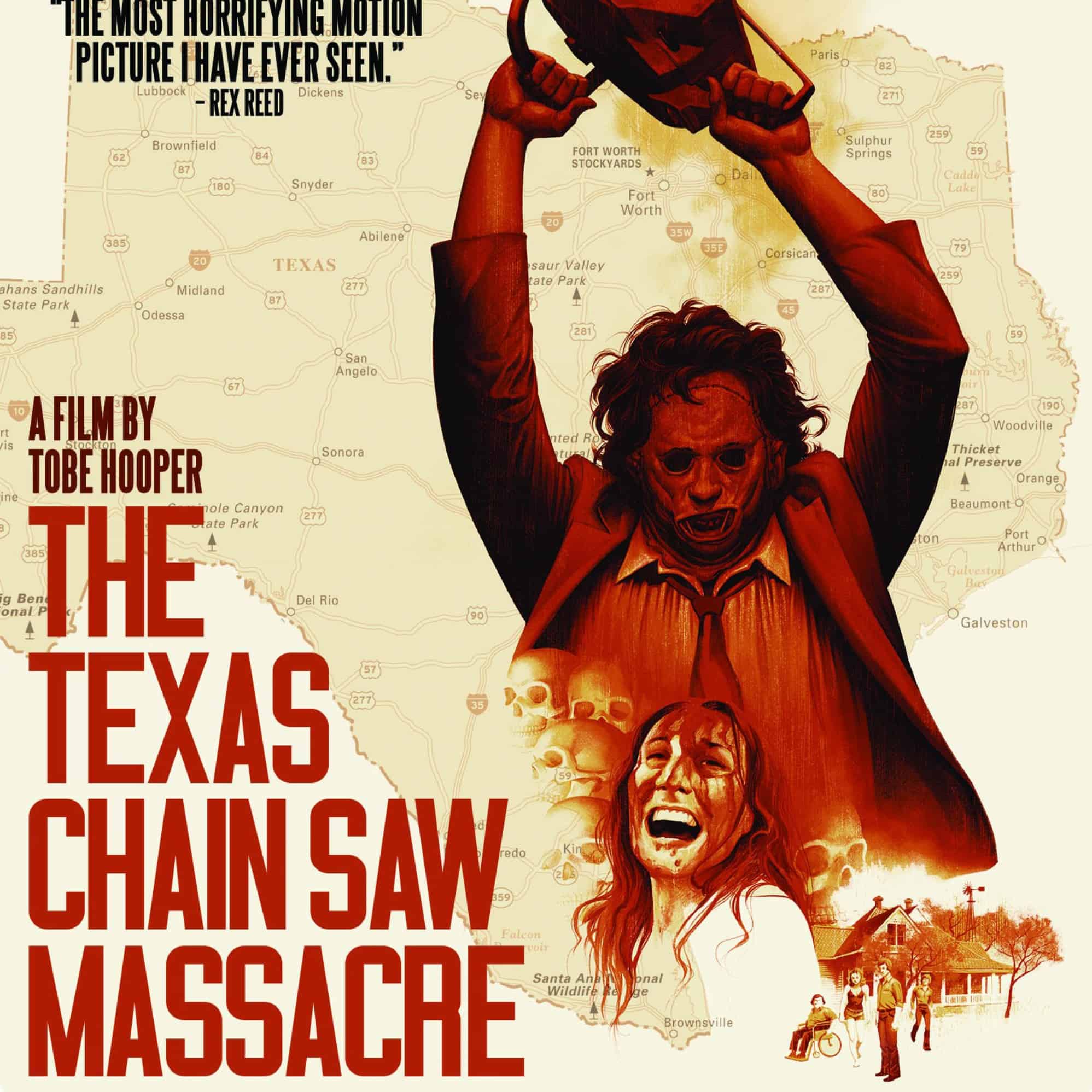
Movie TitleThe Texas Chain Saw Massacre
Release DateOctober 11, 1974 in the United States
TaglineWho will survive and what will be left of them?
Runtime83 minutes / 1 hour 23 minutes
DirectorTobe Hooper
Screenplay Written ByKim Henkel and Tobe Hooper
Based OnOriginal screenplay. The marketing suggested a true story, and some macabre details were loosely inspired by Ed Gein, but the plot and characters are fictional.
Is It a Remake?No. This is the original 1974 film. The 2003 The Texas Chainsaw Massacre is the remake.
BudgetApproximately $80,000 to $140,000, with published figures varying by source
Box OfficeApprox. $30.9 million domestic / worldwide
Main Cast
Marilyn BurnsSally Hardesty
Paul A. PartainFranklin Hardesty
Allen DanzigerJerry
William VailKirk
Teri McMinnPam
Edwin NealThe Hitchhiker
Jim SiedowThe Old Man / Drayton Sawyer
Gunnar HansenLeatherface
John DuganGrandfather
Robert CourtinWindow Washer
William CreamerBearded Man
John Henry FaulkStoryteller
Jerry GreenCowboy
John LarroquetteNarrator
Tobe HooperUncredited partygoer
Awards
⭐ Avoriaz Fantastic Film Festival Winner — Critics Award, Tobe Hooper
⭐ Avoriaz Fantastic Film Festival Nominee — Grand Prize, Tobe Hooper
⭐ Saturn Award Nominee — Best DVD / Blu-ray Collection for The Texas Chain Saw Massacre: 40th Anniversary Collector’s Edition
⭐ National Film Registry — Selected for preservation by the Library of Congress in 2024
⭐ No Academy Award nominations were verified for the film.
⭐ No Golden Globe nominations were verified for the film.
⭐ The film’s real legacy is horror history: it helped redefine low-budget independent horror and became one of the genre’s most influential titles.
Short Plot Summary
Five friends traveling through rural Texas stop to check on a family grave and eventually wander near an isolated farmhouse. That decision, as horror decisions go, could use a little more market research. One by one, they encounter a violent, cannibalistic family and its chainsaw-wielding butcher, Leatherface. Shot with sweaty, documentary-like rawness, The Texas Chain Saw Massacre feels less like a polished horror movie and more like a heatstroke nightmare somebody found in a ditch. It matters because it proved that suggestion, sound, atmosphere, and pure panic can be more disturbing than buckets of gore.
↑ Return to Top
Key Quotes
“Who will survive and what will be left of them?” — Narrator / Tagline
“I just can’t take no pleasure in killing.” — The Hitchhiker
“My family’s always been in meat.” — The Hitchhiker
“You don’t want to go fooling around other folks’ property.” — The Old Man
“Look what your brother did to the door!” — The Old Man
“Sally! Sally!” — Franklin Hardesty
Trivia
Director
- The Texas Chain Saw Massacre was directed by Tobe Hooper, who co-wrote the screenplay with Kim Henkel.
- The onscreen title spells it The Texas Chain Saw Massacre, with “chain saw” as two words, even though many posters, articles, and later franchise titles use “Chainsaw.”
- Hooper wanted the film to have an almost documentary-style realism, which helps explain why it still feels so grimy, sweaty, and uncomfortable.
- Early working titles included Leatherface and Headcheese, which are both horrifying in very different ways.
- Hooper has said part of the film’s inspiration came from the chaos and violence of the era, along with a memorable moment in a crowded hardware store when he imagined using a chainsaw to clear a path through people.
Cast / Casting
- Marilyn Burns’ performance as Sally Hardesty is one of horror’s most exhausting final-girl performances, largely because she spends the climax screaming, running, crying, and surviving through pure terror.
- Gunnar Hansen played Leatherface, bringing a physical, confused, animal-like quality to the character rather than making him a smooth supernatural killer.
- Hansen reportedly studied people with developmental disabilities and large body movement to help shape Leatherface’s physical presence.
- Edwin Neal’s Hitchhiker performance is so twitchy and unsettling that the movie feels cursed before the audience even reaches the farmhouse.
- Jim Siedow was the only cast member to reprise his role in the 1986 sequel The Texas Chainsaw Massacre 2.
- John Larroquette provides the ominous opening narration, giving the movie a fake true-crime seriousness right from the start.
Soundtrack / Score
- The music and sound design were created by Tobe Hooper and Wayne Bell.
- The score is not a traditional melodic horror score. It uses metallic sounds, industrial noise, eerie drones, and unsettling audio textures.
- The soundtrack contributes heavily to the movie’s nasty, overheated atmosphere, making scenes feel like they are buzzing, grinding, and rotting.
- Instead of relying on a hummable theme like Halloween or A Nightmare on Elm Street, this movie uses sound like an anxiety attack.
- The chainsaw itself becomes the film’s most memorable “musical instrument,” especially during the final chase and Leatherface’s sunrise dance.
Location
- The film was shot in Texas, primarily around Round Rock, with additional Austin-area locations.
- Bagdad Cemetery in Leander, Texas, was used for the cemetery sequence.
- The farmhouse used in the film was originally located near Round Rock and later moved to Kingsland, Texas, where it became part of the Grand Central Café property.
- The rural Texas setting is essential to the movie’s power: the characters are isolated, overheated, low on options, and surrounded by open space that somehow still feels claustrophobic.
- The shoot took place during extreme Texas summer heat, which contributed to the cast and crew’s physical discomfort.
- The oppressive heat, dust, and decay are not just atmosphere. Everyone on screen looks miserable because they probably were.
Behind-The-Scenes
- The movie was shot on a very small budget, with commonly reported figures ranging from roughly $80,000 to $140,000.
- Production conditions were notoriously difficult, with long hours, hot weather, rotting set dressing, and physically demanding scenes.
- The dinner table sequence was especially unpleasant to film, partly because of the heat, props, fake blood, and decaying animal materials used on set.
- Despite its reputation, the movie contains less explicit gore than many people remember. Much of its brutality comes from editing, sound, implication, and the audience’s imagination doing the heavy lifting.
- The film’s “true story” marketing was exaggerated. It was not a direct dramatization of real events, though Leatherface and some macabre details were loosely inspired by Ed Gein.
- Leatherface’s masks were designed to reflect different roles or personalities, including the killing mask and the more domestic “old lady” mask used during the dinner sequence.
Nostalgia
- This is one of the foundational “you have to see it to believe it” horror movies, passed from fan to fan like a dare.
- For many viewers, the title alone sounds like grindhouse exploitation, but the film itself is stranger, artier, and more psychologically punishing than its reputation suggests.
- Leatherface became one of horror’s defining icons, even though the original film gives him a more frightened and chaotic personality than later franchise versions often do.
- The movie helped establish the “final girl” structure that later slashers would build on, even before the term became widely used in horror criticism.
- It still has that grimy late-night cable / VHS energy, like something you were not supposed to be watching but absolutely did anyway.
Easter Eggs
- The opening narration and crawl-style setup make the movie feel like a police report or true-crime reenactment, even though the story is fictional.
- The film uses images of bones, feathers, meat hooks, animal remains, and slaughterhouse tools to connect the human horror to industrial meat processing.
- Franklin’s early discussion of slaughterhouse methods foreshadows the way the victims are treated later in the film.
- The repeated sun imagery and astrology references give the movie an odd cosmic-dread flavor, as if the whole day is cursed from the first frame.
- Leatherface’s final chainsaw dance at sunrise is one of horror’s strangest endings: part tantrum, part victory dance, part total breakdown.
- The “Sawyer family” name became more clearly associated with later franchise entries, while the original keeps much of the family identity strange and loose.
Misc.
- The Texas Chain Saw Massacre is rated R.
- The movie runs 83 minutes.
- The film was released by Bryanston Distributing Company.
- It was controversial for its violence and was banned or heavily restricted in several countries, even though much of the gore is suggested rather than shown.
- The Library of Congress selected the film for the National Film Registry in 2024, recognizing its cultural, historical, or aesthetic significance.
- Your 3 Guys and a Flick ratings page lists The Texas Chain Saw Massacre as Episode 28, with Don rating it 2.50, Ken rating it 3.50, Jon rating it 1.00, and an overall rating of 2.33.
Sources Cited
3 Guys and a Flick — Episode 28: The Texas Chainsaw Massacre
3 Guys and a Flick — Ratings
IMDb — The Texas Chain Saw Massacre
IMDb — Full Cast & Crew
IMDb — Awards
IMDb — Quotes
IMDb — Taglines
IMDb — Soundtrack
IMDb — Filming Locations
IMDb — Trivia
Box Office Mojo — The Texas Chain Saw Massacre
The Numbers — The Texas Chainsaw Massacre
Rotten Tomatoes — The Texas Chain Saw Massacre
Metacritic — The Texas Chain Saw Massacre
Austin Film Commission — Filming Locations
Library of Congress — National Film Registry
↑ Return to Top